Get Full Government Meeting Transcripts, Videos, & Alerts Forever!
Get email alerts on the Religious Freedom topic
No spam. Unsubscribe anytime.
Missouri House passes measure to limit emergency restrictions on religious gatherings
Summary
The House approved a committee substitute for House Bill 75, described by its sponsor as protecting religious liberty from emergency restrictions; opponents warned it could hinder public‑health responses in future emergencies.
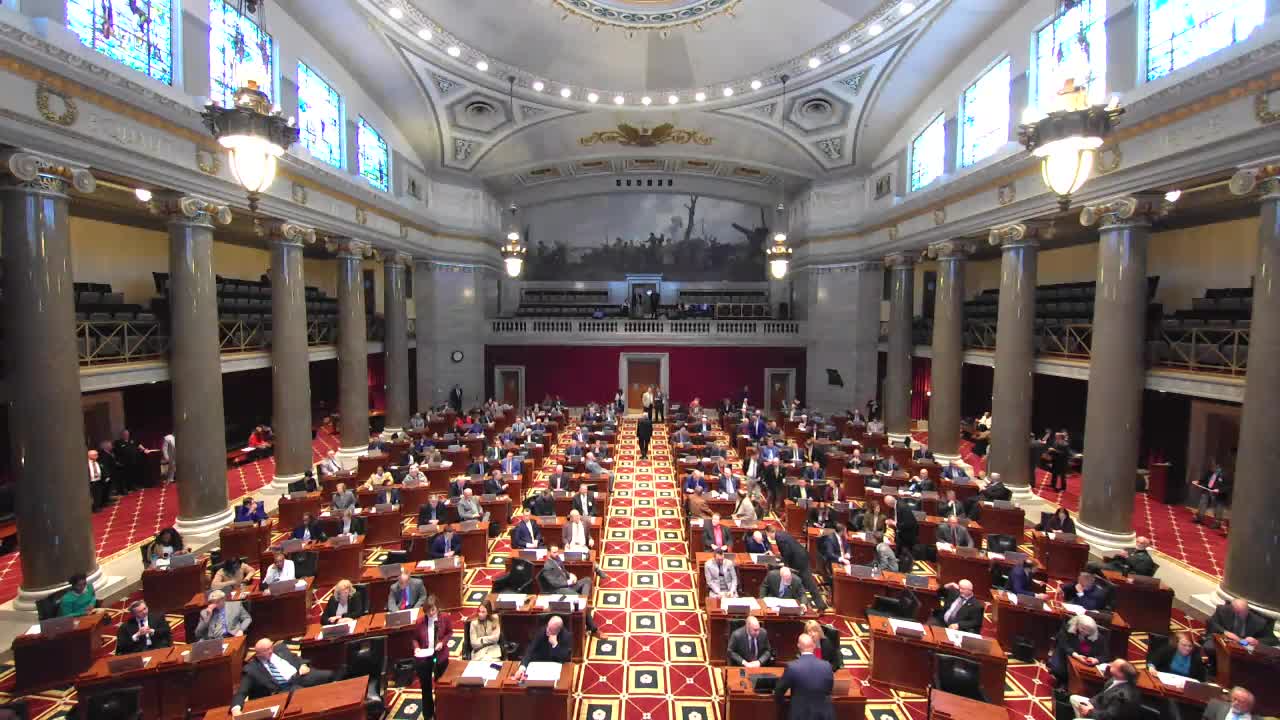
The Missouri House on Feb. 13, 2025, passed a House Committee substitute for House Bill 75, a measure the sponsor said “strengthens the constitutional guarantee of our religious freedom,” ensuring that an emergency — including a pandemic — cannot be used to justify restrictions on the free exercise of religion. The substitute passed on a 106–38 vote with six members recorded present.
The sponsor, identified as the Representative from Jasper County, said the bill removes ambiguity and provides “clear and enforceable safeguards” so government officials cannot target religious gatherings with restrictions. She cited impacts of the COVID‑19 pandemic on mental health and faith‑based recovery programs as part of her rationale.
Opponents urged caution and context. The Representative from Jackson County and other floor speakers said public‑health safety protocols during extraordinary outbreaks aim to mitigate spread and save lives, and warned that a broadly worded restriction could limit the state’s ability to respond to future infectious‑disease emergencies. The Representative from Jackson County cited the Missouri coronavirus toll and said the bill “could actually tie our hands and hinder our ability to use standard protocols should another public health emergency break out.”
A member identified as representing St. Charles County noted Section 6 of the bill provides flexibility for cities on building and fire code matters. After closing remarks and a renewed motion, the clerk announced the final tally: yeas 106, nays 38, and six present; the committee substitute was declared third read and passed.
The substitute now goes to the Senate; floor speakers asked that historical and public‑health context be considered in subsequent review.