Get Full Government Meeting Transcripts, Videos, & Alerts Forever!
Get email alerts on the Property Tax topic
No spam. Unsubscribe anytime.
House amends Senate File 69 on homeowner tax exemption; several changes, backfill and timing debated
Summary
Wyoming House members adopted multiple amendments to Senate File 69, a homeowner property tax exemption bill, removing land from eligibility, lowering caps, adding an occupancy requirement and adding partial backfill; debate included fiscal estimates and whether relief should be immediate or delayed to 2026.
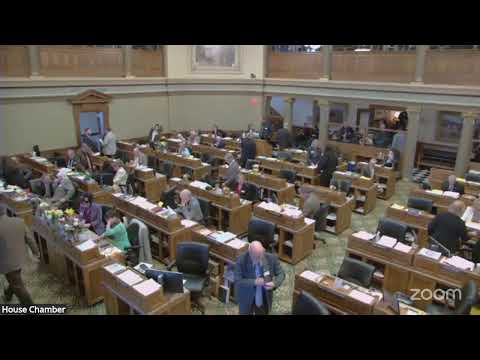
Cheyenn e — The Wyoming House of Representatives on Feb. 13 adopted multiple amendments to Senate File 69, a homeowner property tax exemption measure, shrinking its cost and narrowing eligibility while leaving questions about timing and local backfill unresolved.
The House, after more than two hours of debate and a series of roll calls and voice votes, approved amendments that removed land from the exemption calculation, lowered a per-property cap from $1 million to $500,000, added an occupancy test that would apply beginning in tax year 2026 and added a partial backfill provision for local governments. Lawmakers also adopted Representative Clausen/Klaus’s alternative amendment that computes tax relief by applying a percentage reduction to the property’s increase since 2019 (the bringer described it as a way to target counties that saw the largest increases).
Why it matters: The bill was originally estimated to have a large fiscal impact; sponsors and opponents debated how to reduce the state and local revenue effects while directing relief to owners who actually reside in properties. Several members said immediate relief for taxpayers would be preferable; others argued a phased approach or targeted backfill for impacted local governments would be more defensible.
Key changes and votes
- Amendment 1 (removing land from the exemption calculation) was adopted by voice vote after debate. Representative Locke explained the change as an effort to “remove the land from the current bill” to reduce overall cost and variability tied to lot size.
- Amendment 2 (lowering the cap from $1,000,000 to $500,000) was adopted by voice vote. Supporters said the lower cap would make the policy more broadly equitable; Representative Harshman said the $500,000 cap would fully exempt about “87% of Wyoming homes.”
- Amendment 3 (an occupancy requirement: eligible properties must be occupied at least eight months of the year, phased in for the second tax year) was adopted on a roll-call vote, 56 aye, 4 no, 2 excused. Sponsors said the eight-month rule is intended to target residents rather than nonresident owners; Representative Yen asked for a roll call on that amendment.
- Amendment 4 (added partial backfill for local governments) was divided by the House. Division 2 (the portion that added $100 million of backfill and related language) passed 40–20 (2 excused); Division 1 (a larger backfill expansion) failed 27–33 (2 excused).
- Amendment 5, an alternative approach offered by Representative Klaus that would calculate relief based on 50% of each property’s increase since 2019 (with a proposed cap and other limits), was adopted by voice vote. The bringer said the amendment’s fiscal note would be about $157 million but that a choice in the amendment between existing homestead relief and this approach reduces the estimated net cost to about $111 million per year.
- Amendment 6, clarifying that active-duty military members would not be barred by the eight-month occupancy rule, was adopted by voice vote.
- Several other proposed amendments were withdrawn by their sponsors (amendments 7, 8 and 9). Representative Yen successfully moved to require a bill with amendments incorporated so the House could see the full amended text prior to third reading.
- Members ordered the bill read a third time. A motion to postpone third reading until the next legislative day (Rule 7-3) was put to the body and the objection to that delay was rejected; the objection vote was 35 in favor of continuing (thereby sustaining the objection) and 22 opposed, so the House proceeded with the plan to work the bill on the scheduled day rather than lay it back to Tuesday.
Debate highlights and fiscal context
Representative Locke, who offered several of the amendments, described them as efforts to reduce the bill’s overall price tag and focus relief on residents. Locke said removing land from the exemption “will reduce the overall impact of this bill” and that the amendment package moved the bill’s estimated cost down substantially from initial figures.
Representative Harshman repeatedly cited a table distributed to members showing that a $500,000 cap would fully exempt roughly 87% of Wyoming homes and argued the change protected the bulk of homeowners while keeping state costs lower.
Representative Clausen/Klaus, who offered amendment 5, said the alternate approach — taking 50% off the increase in assessed value since 2019 for each property — better targets counties that experienced the largest increases. He told members the amendment’s initial fiscal note was about $157,000,000 and that the proposal as offered could reduce that to roughly $111,000,000 per year when paired with other eligibility choices.
Opponents and cautionary views
Some representatives from higher-value counties said lowering caps or other changes could disproportionately affect their constituents. Representative Byron warned that cutting the cap to $500,000 “will hurt my district substantially,” where many homes exceed $1 million in market value.
Other members pressed for faster, immediate relief rather than an approach that would begin in 2026; proponents of the phased start said the occupancy verification and administration required more time for implementation.
What the House directed next
The House voted to require an engrossed bill with amendments incorporated and ordered the bill to third reading. The transcript ends before a final third-reading passage vote; the bill remained under active consideration and House members and staff planned additional work and possible conference committee steps to reconcile positions with the Senate.
Ending note
Lawmakers said they expect further amendments and discussion before final passage and indicated some items (backfill amounts, verification language for occupancy, and interaction with existing homestead or property-relief statutes) would likely be refined in conference.