Get Full Government Meeting Transcripts, Videos, & Alerts Forever!
Get email alerts on the Attorney General Budget And Programs topic
No spam. Unsubscribe anytime.
Attorney General's office reports staffing gains, body‑armor grants and multi‑state litigation work
Summary
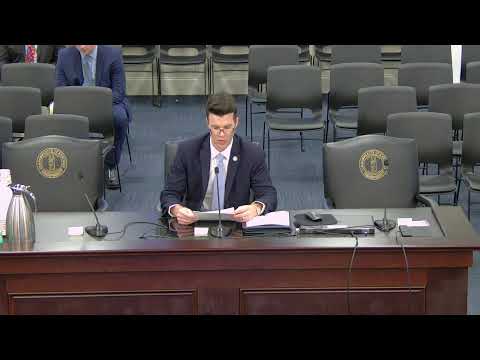
Will Schroeder, senior counsel for the attorney general, told the Budget Review Subcommittee on General Government his office has used funds from last session’s budget to raise pay, stand up a body‑armor grant program and add staff for child‑exploitation digital forensics.
Will Schroeder, senior counsel for Attorney General Russell Coleman, updated the Budget Review Subcommittee on the attorney general’s office staffing, recent programs funded in last year’s budget and ongoing litigation.
Schroeder said raises funded in last session’s budget increased the competitiveness of the office’s pay and improved recruitment and retention, with average raises of several thousand dollars for administrative staff, investigators and staff attorneys. “As a result of these raises we are now more competitive with other public jobs and can keep more of the talented men and women working at the office,” Schroeder said.
Nut graf: Schroeder outlined several programmatic developments the General Assembly funded last session, including a body‑armor grant program, hiring for child‑exploitation investigations and investments to stand against federal and out‑of‑state rules seen as hostile to Kentucky’s energy industries.
The office stood up a body‑armor grant program in July to supply vests at no cost to officers or agencies; Schroeder said about 1,121 Kentucky law‑enforcement professionals have been approved for new body armor and about half of those deliveries are complete. The office also hired a criminal intelligence analyst, a detective and a computer‑forensics examiner to support the Special Victims Unit and plans to hire additional digital‑forensics staff in 2025.
Schroeder described multi‑state litigation the office joined to challenge New York’s climate change law that retroactively levies large sums on energy producers; the office also said prior funding allowed it to oppose federal regulatory steps the office viewed as threats to electric reliability.
Ending: Schroeder thanked the committee and reiterated the office’s willingness to work with legislators on implementation issues as administrative hearings, child support functions and a data‑privacy office transition proceed.