Get Full Government Meeting Transcripts, Videos, & Alerts Forever!
Get email alerts on the Sexual Assault Response topic
No spam. Unsubscribe anytime.
House health committee requires ER staff training on sexual‑assault response, directs study of SANE coverage
Summary
The House Committee on Health Services approved House Bill 219 to require emergency departments to provide staff training on sexual‑assault emergency response and passed House Concurrent Resolution 20 directing a Legislative Research Commission study on gaps in sexual‑assault nurse examiner coverage.
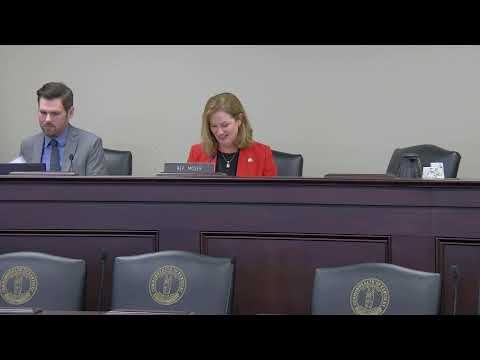
House lawmakers on the House Standing Committee on Health Services on Feb. 20 approved House Bill 219, requiring emergency services to provide mandatory training to emergency medical staff on sexual‑assault emergency response, and passed House Concurrent Resolution 20 directing the Legislative Research Commission to study where trained sexual‑assault nurse examiners (SANEs) are absent and why.
The bill requires emergency departments to make training available to emergency medical staff; the curriculum is to be developed in collaboration with members of the SANE response team advisory committee. Representative Rebecca Raymer, the bill sponsor, told the committee the measure is an interim “fix” to improve immediate care and evidence handling while lawmakers gather data to craft longer‑term solutions.
The measure matters because witnesses and committee members said hospitals across the state do not always have SANEs on site when survivors arrive, producing gaps in care and in evidence preservation. Raymer said the training is not intended to substitute for SANE certification but to ensure emergency‑department staff have information to refer patients to resources, preserve evidence and avoid sending patients away to another facility.
In committee discussion, Jenna Cassidy, staff attorney for the Kentucky Association of [redacted] Assault Programs, said the SANE program coordinators stationed across the state offer the detailed forensic evidence‑collection curriculum for clinicians pursuing SANE credentials. Cassidy explained that the forensic exam kit used for sexual‑assault exams is issued through the Kentucky State Police Lab and contains written instructions that support medical providers during an exam.
Committee members asked whether the bill creates a certification or credential; Raymer and witnesses clarified it does not create SANE certification. Representative Wilner asked for a “quick overview” and Raymer said the committee substitute added language to ensure board‑certified pediatricians or a designee and children’s advocacy centers are included in required instruction. Members also noted that the Kentucky Hospital Association and Kentucky Medical Association told Raymer they were not opposed to the measure.
On the companion resolution, Raymer said HCR 20 directs the Legislative Research Commission to study SANE coverage gaps, identify what hospitals do when a SANE is not on staff and report findings to her by December so the Legislature can address broader policy changes next session.
Votes and formal actions: House Bill 219 passed the committee with favorable expression. House Concurrent Resolution 20 passed the committee with 16 favorable votes; the chair noted some members needed to record votes when they returned from other duties.
The committee recorded questions and clarifications but took no further immediate mandates beyond the training requirement and the LRC study. The committee kept the record open briefly to allow members to sign in and record votes, then adjourned. The committee’s next scheduled meeting was announced for Feb. 20 at noon in Room 149.
Ending — who spoke: Representative Rebecca Raymer sponsored both measures and presented them to the Committee on Health Services. Jenna Cassidy and Wynn Stevens (Children’s Advocacy Centers of Kentucky) appeared as witnesses. Vice Chair Duvall and Chair Mosher presided during the meeting; multiple committee members asked questions during discussion.