Get Full Government Meeting Transcripts, Videos, & Alerts Forever!
Get email alerts on the Gender Affirming Care Incarcerated topic
No spam. Unsubscribe anytime.
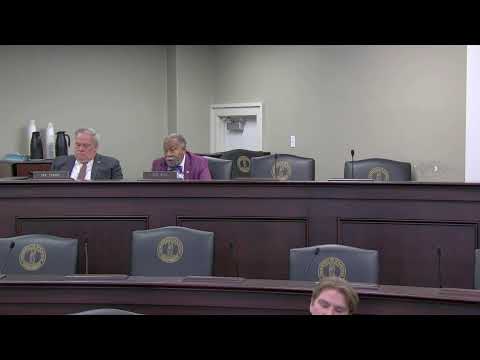
Judiciary Committee reports favorably on bill limiting gender‑affirming care for incarcerated people
Summary
The Kentucky Senate Judiciary Committee reported Senate Bill 2 favorably after testimony from the sponsor, medical and advocacy witnesses, and public commenters; the bill would bar correctional facilities from providing gender‑reassignment surgeries and restrict hormone treatments except in narrowly defined, medically necessary circumstances.
The Kentucky Senate Judiciary Committee on an unspecified date reported Senate Bill 2 favorably with an expression of opinion that "the same should pass," advancing a measure that would bar state correctional facilities from providing gender‑reassignment surgeries and tightly limit hormone therapy for incarcerated people.
Sponsor Senator Mike Wilson (District 32) said the bill "basically states that if you're incarcerated, you're not entitled to have cross *** hormones or *** change operations to change your *** from 1 to another, male to female, female to male." He told the committee he sought to put the restriction into statute to prevent the Department of Corrections from providing those services by memo or internal policy.
Supporters and opponents said the bill matters because it addresses care provided inside jails and prisons and because it raises constitutional and medical questions. Chris Hartman, executive director of the Fairness Campaign, told the committee Senate Bill 2 "would deny medically necessary health care for transgender people held in Kentucky's jails and prisons. It is a clear violation of the eighth amendment of the United States Constitution," and cited recent federal rulings on similar matters. Dr. Jack Skillis, executive director of Mendala House and a clinical psychologist, told senators, "Gender affirming medical care is not experimental. It's not elective, and it's not cosmetic. Treatment for gender dysphoria is proven to be necessary for individuals to lead happy, healthy lives."
Multiple witnesses described harms they say follow interruption of treatment. Hannah Callahan, who identified herself as a transgender woman from Lexington, recounted being unable to receive hormone injections while jailed and said the interruption led to severe depression and an attempt on her life: "I nearly hung myself in my jail cell." Emma Curtis, Lexington councilwoman and a transgender public official, urged senators to vote no and described hormone therapy as "literally life saving."
Sponsor Wilson told the committee the Department of Corrections had previously indicated that, of 467 incarcerated people receiving some form of hormone therapy, 67 were receiving cross‑gender hormone treatment. Wilson said the bill contains a narrow medical exception: if a treating health care provider documents that immediately stopping a drug or hormone would cause physical harm, the provider may institute a period of systematic reduction rather than an immediate stop.
Committee members asked about the scale and fiscal impact of the measure and about whether treatments cited in testimony were prescribed by physicians. Senator Thomas noted he had been told the Department of Corrections stated no gender‑reassignment surgeries had occurred in Kentucky; Senator Wilson replied the department testified there were none but that policy language raised concerns. Several senators emphasized they would defer to medical determinations for narrowly defined medically necessary care as described in the bill.
A motion to report the bill favorably was made by Senator Wheeler and seconded by Senator Reid. The chair announced that "Senate Bill 2 is reported favorably with the expression of opinion the same should pass." The committee record shows multiple senators explained their votes during roll call; the transcript records several individual verbal votes and explanations but does not include a complete, unambiguous numeric roll‑call tally in the provided excerpt.
The committee hearing included extended public comment and expert testimony on both constitutional risks and clinical standards; witnesses for opponents referenced positions of major medical organizations and recent federal court decisions. The committee advanced the bill for further consideration.