
Norwood superintendent presents entry findings; flags curriculum alignment, special education supports and budget strain
Get AI-powered insights, summaries, and transcripts
Subscribe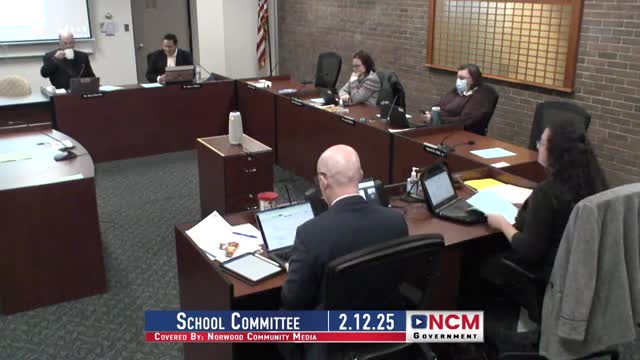
Summary
Superintendent Luff presented a multi‑page entry report citing curriculum alignment gaps, disproportionate discipline outcomes and rising structural budget pressures tied to enrollment and stabilization fund depletion. The committee discussed FY26 budget scenarios and potential cuts or use of free cash.
Superintendent Luff presented a multi‑page entry report and a set of recommendations to the Norwood School Committee Wednesday, summarizing months of interviews, school visits and a community thought exchange that drew roughly 475 respondents and more than 7,000 ratings on ideas.
The report, which Luff described as an "entry findings" document, flagged district strengths—including a "dedicated and passionate staff" and robust community engagement—and several areas of need: inconsistent horizontal and vertical curriculum alignment; uneven academic results for students who are high‑need, English learners or eligible for special education; behavioral and safety concerns; and facility maintenance needs at the elementary level.
The findings also pointed to a demographic shift: roughly 58.3% of the district population was identified as high‑need, 16.6% English language learners, nearly 25% students with disabilities and 40.4% low‑income—figures Luff said should shape staffing and program priorities. Luff said the entry work included more than 50 individual interviews and school visits and that some recommendations had already moved into early implementation.
Why it matters: Luff linked many operational recommendations to the FY26 budget, which the administration presented to the committee as a preliminary 8.1% increase tied to enrollment changes and the opening of the new Coakley Middle School. Luff said the district and town budget offices now face a structural gap, with one‑time stabilization funds that supported FY25 no longer available and a projected use of roughly $7 million of free cash for FY26 under current assumptions.
Committee members and staff focused much of the discussion on the budget tradeoffs that would be required if state aid proposals proposed by the governor are not finalized, and if health insurance and transportation costs rise as the town has reported. Finance staff and committee members said a 2% reduction scenario proposed by the town’s Budget Balancing Commission (BBC) would amount to about $1.2 million; School Committee members pressed for options and tiered scenarios that would limit impact to core programs and student services.
Luff described a set of proposed investments tied to the entry findings: a new Director of Safety, Compliance and Communication; additional behavioral specialists; PLC leadership funds and curriculum coordination to strengthen vertical alignment; and funding toward multi‑tiered systems of support (MTSS) and student services. He said a new Director of Student Services is scheduled to start July 1 and that a separate student services audit is under way.
On facilities and long‑term finance, Luff reminded the committee that the district’s operating budget has grown from about $50 million in FY22 to about $61 million in the current year and that the district has used one‑time reserves and stabilization funds to smooth recent budgets. He said town free cash this year stands at $20,652,677 and that the committee and town leaders are discussing whether to preserve some of that balance for multi‑year stabilization or to apply portions to FY26 needs.
Quotes from the meeting include Luff’s summary of the process: "I have met with more than 50 people individually" and the entry work included "more than 475 members of the school community responding, and more than 7,000 ratings on ideas." Finance discussion included a BBC staff summary that "they asked us to consider contractual obligations, transportation increases, and the addition of what they said, around 5 staff ... as a way to kind of do the baseline for what our request should be," according to finance staff reporting to the committee.
The committee scheduled additional subcommittee work: a budget subcommittee meeting the following day and a joint return to the BBC on Feb. 26. Luff asked the committee to be prepared for a follow‑up meeting before Feb. 26 so the school committee could review proposed reductions and revenue options before the BBC hearing.
Ending: The entry findings were framed as a foundation for a one‑year “bridge” plan to be followed by a full five‑year strategic plan. The committee instructed administration to refine budget scenarios and present tiered reduction options, while continuing planned hires tied to student support and the opening of Coakley Middle School.