Get Full Government Meeting Transcripts, Videos, & Alerts Forever!
Get email alerts on the Behavioral Health Sud topic
No spam. Unsubscribe anytime.
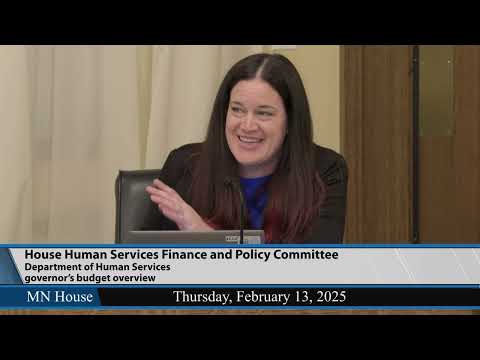
DHS proposes new SUD billing units, recovery-residence certification and changes to behavioral health fund
Summary
DHS proposed disaggregating substance use disorder counseling into six new billing codes, moving units to 15-minute increments, creating a certification process for recovery residences and changing behavioral health fund eligibility and county shares to reduce state-only costs and encourage Medicaid enrollment.
Alyse Bailey and DHS staff told the House committee the governor's budget would create six new billing codes for substance use disorder (SUD) counseling and move billing from one-hour increments to 15-minute units to improve alignment between billed units and services delivered and to support compliance with midpoint billing rules.
Bailey said the change would better reflect different counseling and recovery-support activities and allow DHS to tailor workforce qualifications by service line so that services not requiring higher-level professionals can be delivered by a broader workforce.
The nut graf: DHS proposed both program-integrity alignment (billing granularity and midpoint-rule clarity) and regulatory oversight of residential recovery homes. The department would establish a voluntary certification process for recovery residences, align enforcement with National Association of Recovery Residences (NARR) Level 1 and 2 standards, maintain a public database and require certification for residences seeking housing support payments.
On the behavioral health fund, DHS proposed a 60-day limit on state-funded SUD treatment eligibility (to encourage applicants to enroll in Medicaid for longer-term care), an increase in the county share from 22.9% toward 50% (with exceptions), and removal of a local agency administrative allocation that predated direct access rules.
Bailey also said DHS would phase freestanding room-and-board models into housing support and pursue longer-term solutions to help residents in recovery residences access housing that remains available if they leave a provider'owned program.
Ending: DHS said the changes are intended to improve billing accuracy, strengthen consumer protections in recovery residences and reduce state-only spending by encouraging Medicaid enrollment where appropriate.