Get Full Government Meeting Transcripts, Videos, & Alerts Forever!
Get email alerts on the Disability Waivers topic
No spam. Unsubscribe anytime.
DHS proposes tighter controls on waiver exceptions, rate changes and supports for CFSS workforce
Summary
Assistant Commissioner Natasha Mears outlined governor's proposals to limit growth in disability waiver spending through tighter documentation for rate exceptions, changes to residential and day-service rate inputs, a reduced absence/utilization factor, and changes to customized living access. The proposal also includes wage and training supports
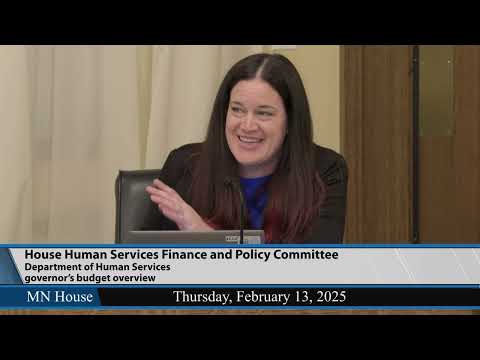
Assistant Commissioner Natasha Mears told the House Human Service Finance and Policy Committee that the governor's budget contains multiple proposals to curb unexpected growth in disability waiver spending while supporting direct care workers under Community First Services and Supports (CFSS).
Mears said the package would tighten what qualifies for DWRS (disability waiver rate system) rate exceptions and require stronger documentation and yearly renewal for exceptions; add monitoring of rate inputs to ensure authorized services are delivered; and change several assumptions in the rate framework for residential and day services.
The nut graf: DHS presented a set of administrative and rate-design levers designed to slow waiver spending growth while directing new resources (training stipends, enhanced rates) to experienced and medically complex CFSS/PCA workers.
Key proposal components Mears described include limiting the number of billable days in certain residential settings through an "absence and utilization factor," restricting customized living access for people under 55 (redirecting them to other waiver services), adjusting payments for overnight staffing (awake vs. asleep), and creating a new lower reimbursement for sleeping night supervision. For day and unit-based services, DHS proposes lowering the absence and utilization assumption (from 9.4% to 3.9% for individualized home supports) to align with other waiver services.
On the workforce side, Mears said the governor's package implements provisions tied to a collective bargaining agreement with SEIU/SEIU-represented workers by increasing pay for experienced workers, raising the enhanced medical-complexity add-on from 7.5% to 12.5%, funding training and stipends, and funding a web-based matching system to connect direct care workers and people seeking care.
Mears and Bailey emphasized that the proposals interact (several changes affect each other's fiscal impacts) and that implementation details will matter for access and provider finances.
Ending: DHS asked the committee to consider trade-offs across the package during negotiations and to return for further technical questions.