Get Full Government Meeting Transcripts, Videos, & Alerts Forever!
Get email alerts on the Land Use topic
No spam. Unsubscribe anytime.
Appeals court questions use of GLAM guidelines, Devon Woods exclusion and fire-safety findings in Braintree 40B denial
Summary
At oral argument, a three-justice panel probed whether state GLAM guidelines and regulatory exceptions properly excluded Devon Woods from Braintree’s 40B denominator, how the numerator should be calculated, and whether the Housing Appeals Committee and zoning board relied on an enforceable local basis for fire-safety and open-space objections.
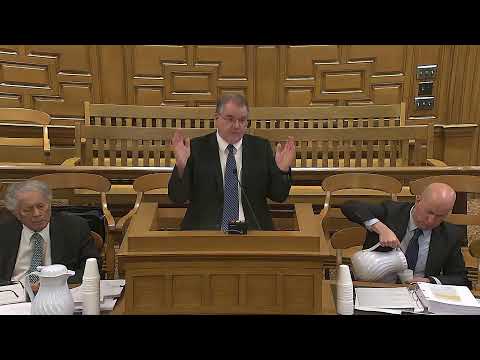
An appeals-court panel questioned lawyers Friday about whether state GLAM guidelines and regulatory exceptions were properly applied when the Town of Braintree’s Zoning Board of Appeals denied a Chapter 40B comprehensive permit.
Roger Smaraj, counsel for the Town of Braintree Zoning Board of Appeals, told the panel that “Chapter 40 b allows a local zoning board to deny a comprehensive permit if doing so is reasonable and consistent with local needs,” and that one way a municipality establishes that consistency is by meeting the GLAM statutory minimum. Smaraj said the central disputes in the appeal are whether conservation-restricted land in Devon Woods should be included in the denominator used to calculate the GLAM threshold and whether the GLAM guidelines themselves were properly applied given administrative-procedure concerns.
Why it matters: The GLAM calculation—comparing existing low- and moderate-income housing to total land area zoned residential, commercial, or industrial—can create an irrebuttable presumption that a denial is “consistent with local needs” if a municipality meets the 1.5% threshold. If the town satisfied that floor, Smaraj argued, the Housing Appeals Committee (HAC) lacked jurisdiction to overturn the zoning board’s denial.
The appeals panel repeatedly pressed counsel on two types of questions: the textual scope of the statute and regulations, and whether administrative guidelines (the GLAM guidelines) can introduce substantive rules without the notice-and-comment procedures the Supreme Judicial Court has recently emphasized.
Denominator dispute: Devon Woods and regulatory exceptions
Smaraj urged the court to exclude the Devon Woods tract from the denominator because a perpetual conservation restriction prevents residential, commercial, or industrial development on that acreage. He argued that the regulations permit exclusion where a zone “completely prohibits residential, commercial, or industrial use,” pointing to DEP-related exclusions invoked below.
Justice John Englander and the other panel members pressed counsel on whether the regulation’s use of the word “zone” should be read narrowly (as a zoning district) or more broadly. Englander raised a textual question: if the statute plainly speaks of land “zoned for residential, commercial, or industrial use,” why should a regulation’s reference to a “zone” be read to exclude land that, while zoned, cannot be built upon because of a conservation restriction?
Peter Freeman, counsel for the private defendant, responded that the applicable exclusion is “black and white” and tied to a specific DEP statute (referred to in argument as chapter 131, section 40). Freeman told the court that a DEP conservation restriction is a classic exclusion because such land “can't be developed” and therefore should not be counted in the statutory denominator.
Numerator and “active maintenance” dispute
The panel also questioned how existing affordable housing acreage should be credited toward the numerator. Counsel debated whether partial-credit or proportional approaches are authorized by the regulations or used only in the GLAM guidelines. Smaraj argued that the HAC applied the GLAM guidelines and thereby reduced the numerator. He said the town’s highest numerator at the superior court was 81.859 (a figure the parties discussed in briefing) and that small changes and rounding could alter whether the town meets the 1.5% threshold.
Freeman and other counsel disputed some of the GLAM-driven adjustments. The court noted that Braintree’s original denominator used in local proceedings was 5,091 acres (record citation: vol. 8, p. 541) while the HAC ultimately found a denominator of 5,498.27 acres; the difference was drawn to the justices’ attention during argument.
Open-space and recreation requirements
The panel examined whether the zoning board’s denial relied on a legitimate local bylaw basis tied to open-space requirements. Counsel for the town acknowledged that a local bylaw requires 2,000 square feet of open space per multifamily unit and that the proposed apartment and townhouse portions provided substantially less—counsel cited figures used below of about 350 square feet per apartment unit and about 462.5 square feet per townhouse unit.
But the HAC framed the issue, and its decision referenced, “open recreational space” rather than “open space” under the town bylaw. The justices questioned whether that distinction mattered and whether the zoning board had relied on an enforceable written local bylaw (as opposed to testimony about recreational amenities) when finding the project inconsistent with local needs.
Fire safety testimony and the evidentiary basis for denial
The panel spent significant time on fire-access issues the zoning board raised. Counsel and the court discussed testimony by Deputy Chief Sawtell (present in the record), who on cross-examination conceded it might be “theoretically possible” to put a ladder to the roof but testified that rooftop access would be unsafe given topography and access limitations. The court questioned whether the HAC misstated that testimony when it summarized the deputy chief as saying roof access existed without safety concerns.
The justices pressed whether the town pointed to any written, local bylaw or standard that exceeded state fire-code requirements. Counsel for the Commonwealth, identified in argument as Mr. Hick, said the HAC had to weigh testimony and pointed the court to precedent (Holliston and other SJC decisions) about when local concerns satisfy the “consistent with local needs” standard; but he acknowledged that the record did not include a written local bylaw imposing greater requirements than state law. Mr. Hick told the panel the GLAM guidelines were adopted to “fill in the gaps” of the regulations and that they had longstanding use in the 40B context, although the parties hotly disputed whether the guidelines added substantive rules that must be promulgated through formal rulemaking.
Administrative-law issues: GLAM guidelines and AG v. Milton
A recurring theme was whether the GLAM guidelines, which parties and the department have used to operationalize the GLAM calculation, amount to substantive rulemaking that would require formal notice-and-comment procedures under the Administrative Procedure Act. Counsel argued over how to read the Supreme Judicial Court’s recent AG v. Milton decision in light of other 40B precedent: the Commonwealth’s counsel said the guidelines “fill in the gaps” of existing regulations and therefore fall within acceptable administrative practice, while opposing counsel argued reliance on the guidelines improperly imposed requirements not present in duly promulgated regulations.
What the court asked next and status
The three-justice panel asked numerous follow-up questions, sought clarification about record pages and numerics, and pointed to recent case law. Several justices suggested they intended to take the arguments under advisement. The panel concluded the session by thanking counsel and indicating the matter would be considered.
Votes at a glance: none (appellate oral argument; no court ruling issued at the hearing)
Provenance: This article summarizes arguments made to the appeals court and cites counsel statements and judicial questioning from the oral-argument record.