Get Full Government Meeting Transcripts, Videos, & Alerts Forever!
Get email alerts on the Foreclosure topic
No spam. Unsubscribe anytime.
Housing advocates press for 10-year limit on dormant second mortgages as 'zombie mortgage' foreclosures rise; lawyers and banks warn of legal side effects
Summary
Consumer advocates urged a 10-year statute of limitations for dormant second-mortgage foreclosures to curb 'zombie mortgage' actions. Advocates said cases are resource-intensive and often surprise homeowners; bankers and defense-bar attorneys warned about retroactivity, narrow drafting and potential surge in litigation to preserve rights.
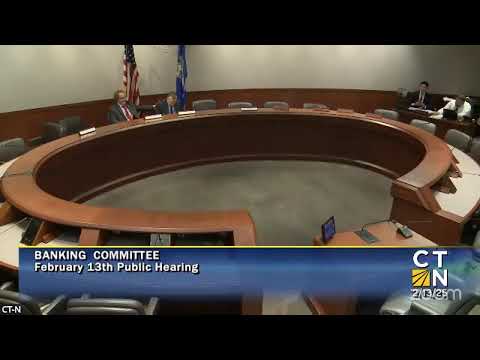
Consumer advocates and housing attorneys asked the Banking Committee to approve a 10-year statute of limitations on dormant second mortgage foreclosures, arguing the change would protect homeowners surprised by long-dormant claims and help legal advocates triage limited resources.
"This would address from our perspective the issue around zombie mortgage foreclosures," said Jeff Gentes, an attorney who helps homeowners defend foreclosures, in support of House Bill 6,878. Gentes described cases in which borrowers lost track of a long-dormant second mortgage that had not issued statements or appeared on credit reports; when the note later surfaced, the borrower faced foreclosure for balances that sometimes had ballooned because of fees and accrued interest. He described instances where a loan originally for about $60,000 later was claimed to be $162,000 after years of inactivity.
Lorraine Martinez Bellamy of the Connecticut Fair Housing Center also testified in strong support. "By setting that 10-year statute of limitation, it would...address the worst of the debt collectors that we've seen," she said, adding that most second-mortgage holders are not bound by federal agencies' loss-mitigation policies and frequently offer workouts that require significant down payments and high rates that many homeowners cannot meet. She told the committee that litigating these cases is time- and resource-intensive and that many homeowners are unfamiliar with the existence or status of long-dormant second liens.
Committee members and other witnesses stressed practical and legal complications. Senator Berthel and Representative Doucette asked about scale; Gentes estimated several dozen active cases and "probably hundreds" of intakes in recent years and said his organization has done "a hundred intakes" over the past two to three years. He said most zombie claims stem from sales of charged-off assets to debt buyers or small private investors rather than community banks. "Zero of these come from local community banks," Gentes said.
Opponents and neutral observers urged careful drafting. Bill Marrone of the Connecticut Credit Bar Association said shortening a statute of limitations can create a short operational runway for creditors and produce a sudden wave of suit filings as holders try to preserve rights before a new law takes effect. He urged caution on retroactivity and on language that could unintentionally nullify common contract clauses that toll default. "The runway is very short for people to operationalize," Marrone said, noting the proposed statutory effective date could prompt a spike in filings before enactment.
Attorney John Diorio raised a related point about shared-appreciation products discussed elsewhere in the hearing, saying those contracts should be carefully limited and, in his view, be administered by public agencies rather than left to private vendors. He warned that poorly regulated new products could become future sources of zombie-type claims.
What it means: Advocates argued a 10-year limit would provide a bright-line remedy for long-dormant second liens that can result in disproportionate financial harm, while banks and lawyers urged careful drafting and considered effective dates to avoid unintended consequences and preserve due-process protections for creditors.
Ending: The committee heard detailed factual accounts and legal warnings and signaled the need for further drafting and stakeholder consultation to balance homeowner protection with legal certainty for creditors.