Get Full Government Meeting Transcripts, Videos, & Alerts Forever!
Get email alerts on the Urban Forest topic
No spam. Unsubscribe anytime.
Pleasanton commission reviews draft 25-year Urban Forest Master Plan, flags funding and wildfire outreach needs
Summary
City staff and consultant Dudek presented a draft 25-year Urban Forest Master Plan outlining canopy goals, a 25-year implementation budget, equity priorities and a wildfire appendix; commissioners raised outreach, funding-source clarity and coordination with fire agencies as priorities for revision before council review.
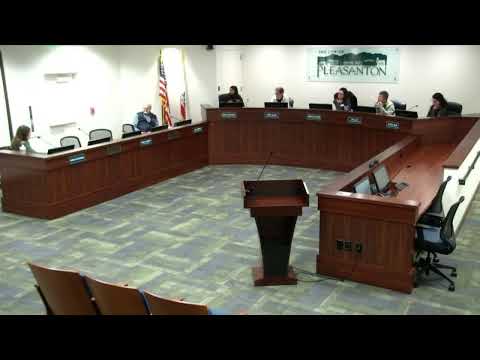
Pleasanton city staff and their consultant Dudek presented a draft Urban Forest Master Plan (UFMP) to the Energy and Environment Commission, describing a 25-year roadmap to manage, preserve and expand the city’s tree canopy on public and private property.
The plan, presented by Sarah Hosterman (Landscape Architect Assistant, City of Pleasanton) and Kevin Cullinan (Dudek), lays out a public-facing document, a technical assessment for staff and an appendix with wildfire guidance, species lists and best practices. The presenters told commissioners the plan is intended to support the Climate Action Plan 2 (CAP 2) goals and establish a measurable baseline for city tree management.
Commissioners and residents asked for clearer budgeting detail, more public education and stronger wildfire outreach. Staff said they will take the draft to the Park and Recreation Commission, then to City Council, with a target to present a final draft to council on May 20.
Why it matters: the UFMP sets the city’s approach to trees and urban canopy for the next 25 years and ties to greenhouse-gas sequestration goals in the Climate Action Plan. Trees affect shade, property values, stormwater and public safety in high-fire areas.
Key facts and findings presented
- Canopy change: The consultants reported citywide canopy cover rose from about 18.5% in 2012 to 25.3% in 2022. The plan notes that imagery resolution and ordinance enforcement likely contributed to the increase.
- Ownership and inventory: Private property accounts for roughly 70% of canopy cover; publicly managed trees account for the remaining 30%. Staff said the city completed an inventory of roughly 25,000 city-managed trees.
- Planting and budget: The plan proposes roughly 6,300 new trees over 25 years, with the city planting about 4,000 of those. Staff estimated current annual spending on urban forest management at about $1,200,000 and projected an additional $20,500,000 over 25 years to meet plan goals and maintain existing services; that projection could change depending on grant funding, developer mitigation funds and policy choices such as the length of establishment-care periods.
- Staffing: The draft recommends creating a dedicated urban forestry team or at least one full-time urban forest manager to coordinate public and private outreach, grants, contractors and implementation.
- Wildfire: The appendices include a wildfire chapter, a recommended species list for wildland-urban-interface (WUI) areas and references to Cal Fire standards. Staff said the city secured a roughly $1,000,000 Cal Fire grant for fuels reduction in the August and Bernal parklands and is coordinating with East Bay Regional Park District on fuels management where the park district holds primary ownership.
Commissioner and public comments
Commissioners and residents urged more public education (social media, mailers, in-person events), rebates or incentives for private-property plantings, volunteer tree-care programs and clearer budgeting that separates dedicated urban forestry funds from general-fund spending. Commissioners also asked staff to clarify the size and source of the “urban forestry fund” and how developer mitigation payments and fines are tracked and spent.
Residents and commissioners pressed for wildfire preparedness outreach targeted to homeowners in high-risk zones; staff said some wildfire guidance is in the appendix and that more general home-hardening or fire safety material is available from the Livermore-Pleasanton Fire Department and Cal Fire.
Next steps
Staff will present the draft to the Park and Recreation Commission, then to City Council in March, incorporate commission comments in April and return a final draft to council on May 20. The commission requested clearer budget tables showing expected annual income from the dedicated urban forestry fund versus general-fund costs, and a clearer plan for outreach and volunteer coordination.
Ending note: Commissioners generally praised the plan’s scope and the inventory work while urging staff to sharpen funding sources and outreach plans before the plan goes to council.