Get Full Government Meeting Transcripts, Videos, & Alerts Forever!
Get email alerts on the Tenant Harassment Refund topic
No spam. Unsubscribe anytime.
Mountain View committee affirms $16,530 rent refund in harassment and unlawful-rent appeal
Summary
The Rental Housing Committee unanimously affirmed a hearing officerdecision ordering $16,530 in rent refunds to a tenant who said sustained harassment and improper rent increases made her unit uninhabitable and forced her to move out.
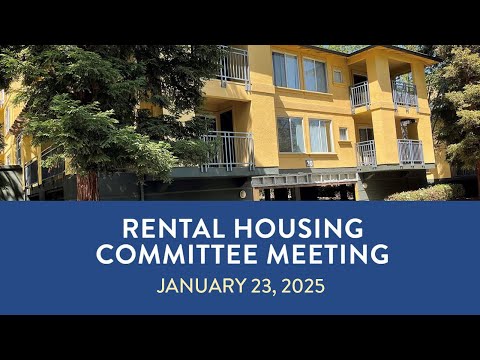
The Mountain View Rental Housing Committee on Jan. 23 unanimously adopted a tentative appeal decision that confirmed a hearing officer's earlier finding that a tenant had proven harassment and unlawful rent practices, and ordered the landlord to pay $16,530 in refunds.
The committee's action affirms the hearing officer's conclusion that ongoing harassment by another tenant had breached the petitioner's right to quiet enjoyment and amounted to a decrease in housing services and a failure to maintain a habitable unit. The hearing officer had separately found the landlord failed to roll back rent to the base-rent date under the city's rent ordinance (CSFRA), awarding an $8,000 refund for habitability/housing-service impacts and $8,530 for unlawful rent dating to January 2017; the committee left the total award at $16,530.
The hearing officer's decision also found the unit was not properly registered in 2021 and 2022, declined to offset the award by sums the respondent claimed the tenant owed, and said the hearing officer did not have authority over the validity of the tenant's 30-day notice to vacate.
At the Jan. 23 meeting, Leonard Siegel, who identified himself as the property owner, said the tenant had vacated and obtained a restraining order and argued those facts and other claimed procedural defects undercut the award. 'Miss Garcia,' the tenant, told the committee she left early in her lease because her health deteriorated amid the harassment and that the added stress harmed her and her son.
Staff'prepared tentative appeal findings that addressed 14 discrete arguments raised by the respondent, including alleged factual errors, questions about registration records, claims the ordinance's rollback provision is unconstitutional, and assertions that harassment falls outside the CSFRA. The staff analysis concluded that the hearing officer's factual findings were supported by a preponderance of the evidence in the record, that record evidence showed multiple rent increases and failure to roll back to the base rent, and that harassment here went beyond an ordinary neighbor dispute.
Committee members who spoke in deliberations emphasized the committee's limited role: they may review legal and factual findings for substantial-evidence support but cannot decide constitutional challenges to the ordinance. Member Robert Cox moved to accept the tentative decision; the motion was seconded and passed unanimously.
The committee instructed staff to issue the final written decision to the parties; staff indicated the written decision would be mailed the following week.
Why it matters: the case illustrates how the city's administrative process can produce monetary awards for tenants who prove habitability and service reductions, and it underscores that local determinations about ordinance application are subject to later court review if constitutional questions are raised.