Get Full Government Meeting Transcripts, Videos, & Alerts Forever!
Get email alerts on the Public Health Substance Regulation topic
No spam. Unsubscribe anytime.
Elgin council bans sale of unregulated THC edibles, rejects age-limited alternative
Summary
After extended debate about youth safety, advertising and economic effects, the Elgin City Council voted 7–2 to outlaw local sale and delivery of certain tetrahydrocannabinol products for human consumption until state rules change; an amendment to limit sales to people 21+ and require behind-the-counter display failed 5–4.
The Elgin City Council voted 7–2 on Feb. 12 to make the advertisement, display, sale and delivery of certain tetrahydrocannabinol (THC) products for human consumption unlawful within city limits, citing concerns about unregulated concentrations, packaging attractive to minors and limits of state testing.
The ordinance targets products derived from hemp that are being marketed and sold as edible or ingestible THC items without state regulation, and sets a minimum fine of $1,000 for violations plus reimbursement for city testing costs, according to the ordinance presented to council.
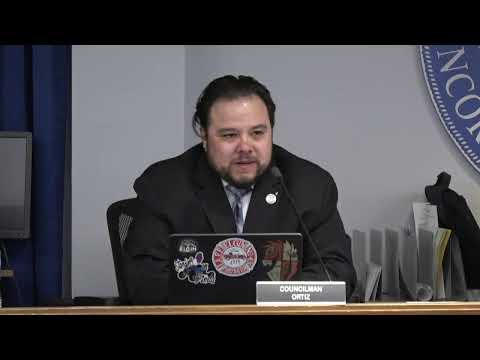
Council Member Anthony Ortiz, who sponsored the item with Council Member Rafael Goode, said the measure responds to a regulatory “loophole” that allows synthetically derived Delta-8 and other hemp-derived THC products to be sold in convenience stores, vape shops and gas stations. Ortiz showed packaging he said resembled candy or cereal and said product labels lacked ingredient lists and reliable potency information. “Until the state regulates this the way it does marijuana, these products are unregulated and unsafe,” Ortiz said.
Council members debated alternatives and enforcement. Council Member Chris Powell and Council Member Rauschenberger pushed for a less restrictive approach: requiring 21+ identification and behind-the-counter storage, similar to cigarette or alcohol sales. Rauschenberger moved an amendment to require that affected products be kept behind the counter and sold only to customers 21 or older; the amendment failed 5–4.
Corporation Counsel Sam Beck said the proposed ordinance, as worded, would ban “any products for human consumption that are derived from hemp under the loophole described in the ordinance” and confirmed that topicals such as lotions and shampoos are excluded because the ordinance applies to items used for consumption. Chief Anna Lally told council that testing and enforcement raise technical challenges, including difficulty that some labs have distinguishing Delta-8 from Delta-9 in samples.
Supporters argued the ban is a stopgap while the Illinois Legislature and federal authorities catch up. Opponents said a ban could harm small hemp retailers and undercut regulated cannabis dispensaries, and urged a restriction tied to state action or a time-limited “sunset.” Council Member Dixon, who had previously tabled the item to wait for state action, said he would support the ban to avoid another two-year delay.
The final roll call was 7 in favor, 2 opposed. Council members Ortiz, Goode, Dixon, Martinez, Stefan, Thorne and Mayor David Captain voted yes; Council Members Powell and Rauschenberger voted no.
Votes at a glance: earlier in the meeting the council voted separately on an amendment to make the ordinance age-restricted and behind-the-counter; that amendment failed 5–4 (yes votes: Powell, Rauschenberger, Stefan, Rauschenberger — recorded roll shows dissenting votes and a close count). The main ordinance then passed 7–2.
The council directed staff to prepare a revised ordinance implementing the council’s decision; the city attorney said the ordinance will be updated and returned for formal codification and enforcement planning.