Get Full Government Meeting Transcripts, Videos, & Alerts Forever!
Get email alerts on the Animal Feeding Setbacks topic
No spam. Unsubscribe anytime.
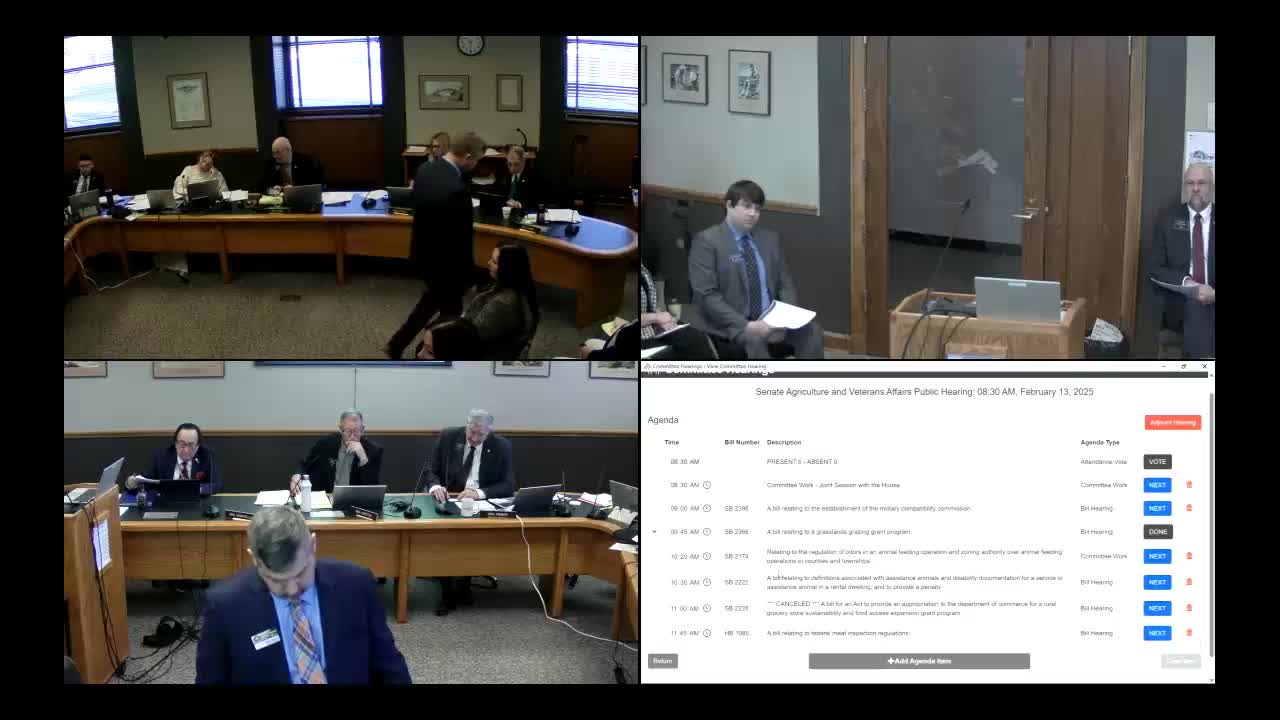
Senate removes new setback language, approves upgraded odor tool option for animal feeding operations
Summary
The committee approved amendments that keep current setback distances intact but permit counties and townships to use an updated odor/annoyance footprint tool developed by the Agriculture Commissioner to adjust setbacks in local ordinances.
Senate Bill 2174, which previously proposed changes to setbacks for animal feeding operations, was amended in committee to remove any statutory change to existing setback distances and instead to preserve current law while allowing counties or townships the option to use a commissioner-developed odor/annoyance “footprint tool” to expand or reduce local setback distances.
Committee staff and Agriculture Department representatives described the amended language as a compromise that preserves existing setback rules but offers an evidence-based way for local governments to adjust setbacks when appropriate. Sean Quissell of the North Dakota Department of Agriculture told the committee the statute’s phrasing uses “may,” making use of the tool optional for local governments; counties or townships that wish to extend setbacks beyond current state code must use the odor-footprint tool. The bill specifies that the odor-annoyance percentage should not exceed 94% in the tool’s calculations.
Senators voted to approve the amendment and then to give the bill a do-pass recommendation as amended. Roll-call votes were recorded for both steps. For the final do-pass vote on the amended bill Senator Marsalais voted No; Senators Weston, Weber, Chairman Lewick, Vice Chair Meerdal and Senator Lam voted Yes/Aye.
Ending: The committee approved the amendment and advanced the bill as amended; the amendment preserves current statutory setback distances while establishing a methodology to let local governments use a more sophisticated odor-footprint tool to tailor local land-use decisions.