Get Full Government Meeting Transcripts, Videos, & Alerts Forever!
Get email alerts on the Elections topic
No spam. Unsubscribe anytime.
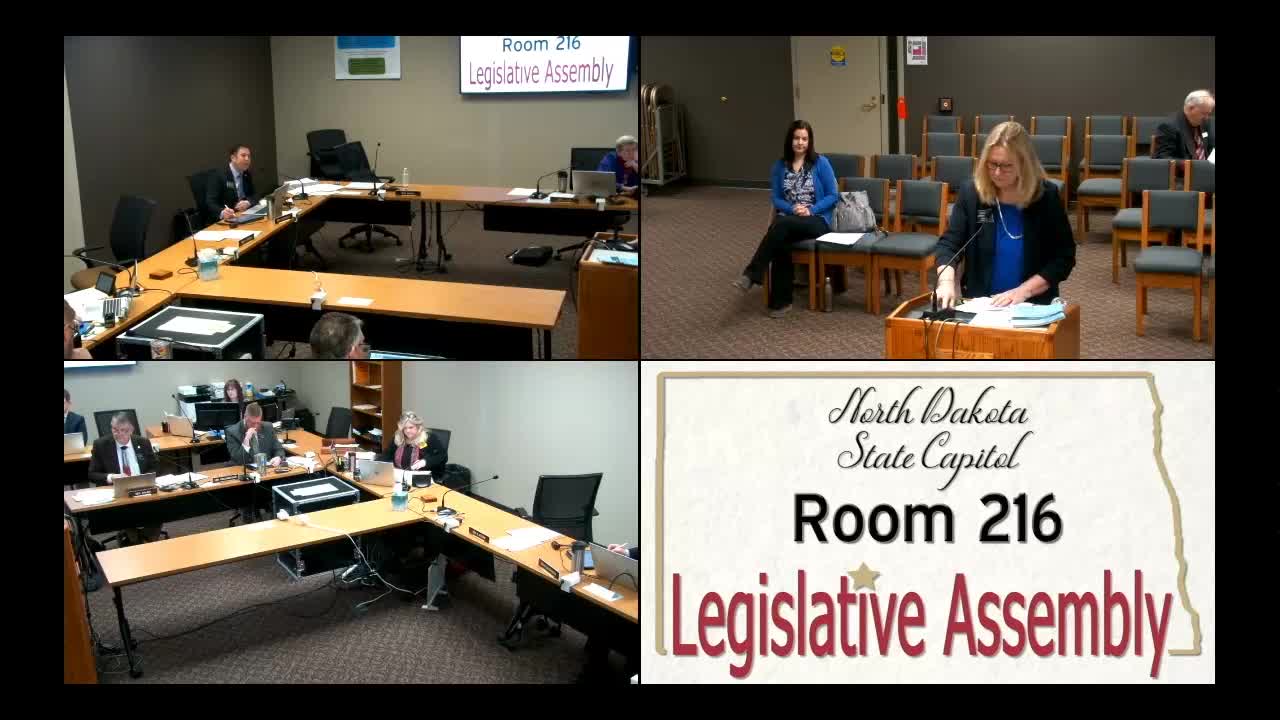
Senate committee hears bill to send neutral, plain-language election guides to voters
Summary
The Senate State and Local Government Committee heard testimony on Senate Bill 22-30, which would have the Secretary of State distribute objective educational materials about ballot measures to active voters; witnesses and the secretary discussed costs, reading level, and public outreach.
Senate State and Local Government Committee members heard extended testimony on Senate Bill 22-30, a measure that would direct the North Dakota Secretary of State to prepare and distribute explanatory materials about statewide ballot measures to active voters ahead of elections.
Supporters told the committee the measure aims to give voters clear, neutral context about what a “yes” or “no” vote would do and where proposed measures originated. Senator Yana Bridal (District 19), who introduced the bill, said too many voters call her office asking what measures mean and that a short neutral explanation would help constituents decide.
The bill matters because North Dakota voters faced five statewide measures in the last general election and many callers sought clarification, the sponsor and the Secretary of State said. The committee heard questions about how to ensure summaries are accurate, nonpartisan and readable, and how much the distribution would cost the state.
Secretary of State Michael Howe told the committee his office supports the concept and noted practical constraints. “If there's any way we can educate voters about the issues or make them more aware of the issues, this is why we stand in support of Senate Bill 22-30,” Howe said, adding the fiscal-note estimate in the amended bill allocates $600,000 as a baseline for printing and postage for one ballot measure, with costs rising for multi-question ballots and higher-turnout elections.
Academic testimony emphasized readability and process. Dr. Ellie Shockley, a social scientist who has researched ballot-measure voters, recommended the bill prioritize accuracy, fairness and readability rather than the term "objectivity," and suggested including a mechanism for sponsoring committees to submit brief pro/con summaries and to rebut the state's summary if they believe it is inaccurate.
Committee members and witnesses discussed alternatives already in use, such as the League of Women Voters and other nonpartisan online resources, and how local or municipal measures that coincide on the ballot should be handled. Secretary Howe said the office already publishes petition titles, full ballot text and an analysis including fiscal impact on its website, and that a mailed summary would be an additional channel.
On cost and logistics, Howe said the appropriation in the amended version is a starting point: "It wouldn't be $600,000 per measure — that would be your starting point because I'm assuming we'd have one postage stamp if there's like three questions; it's just the amount of printing," he said. Committee members pressed on whether the materials should require a specific reading-level metric; witnesses suggested setting readability goals but leaving exact standards to procedures developed by the Secretary of State.
The committee did not take a final vote on the underlying policy question during the hearing; senators instead asked follow-up questions and signaled continued interest in refining the bill's language and fiscal assumptions. The Secretary of State and multiple witnesses agreed on the value of more and clearer voter information, while acknowledging limits on how much citizens will read.
The committee will consider amendments and fiscal details before final action later in the session.