Get Full Government Meeting Transcripts, Videos, & Alerts Forever!
Get email alerts on the Teen Services Survey topic
No spam. Unsubscribe anytime.
Redondo Beach youth commission receives teen survey, refers cannabis impacts to substance-abuse subcommittee
Summary
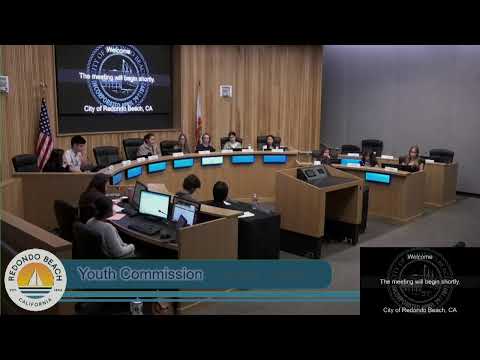
The Redondo Beach City Youth Commission received results of a 214-response teen survey and voted to ask its substance-abuse subcommittee to study how the city's cannabis ordinance and retail openings may affect local youth.
The Redondo Beach City Youth Commission on Wednesday received results from a city teen survey showing 214 responses and voted to ask its substance-abuse subcommittee to study how the city—s pending cannabis permitting could affect teens.
The survey, available Jan. 8—Feb. 4 and containing 18 questions, showed most respondents came from North Redondo (ZIP code 90278). The presenter said the top priorities identified by respondents were mental health and substance or drug abuse; preferred communications were email, social media and text messages; and the most-used social platforms were Instagram (about 70%) and TikTok (about 37%). "In total, we received 214 different individuals completing the survey," the staff presenter said during the meeting.
The survey presentation was received and filed by voice vote. Commissioners were told the full dataset, including open-ended responses, is in the meeting's blue folder for subcommittees to use when planning programming.
Why it matters: Commissioners and teens can use the survey to prioritize programming and outreach, inform subcommittee work on the teen center and communications, and shape any recommendations forwarded to the City Council.
Survey details and priorities The presenter said the survey ran for roughly 30 days and was promoted on the city website, social media and via Redondo Union High School communications, which boosted responses. Respondents most often selected unstructured hanging out and watching movies as favorite social activities; cooking and baking and field trips ranked highly among program interests. Major barriers to participation included schedule conflicts and transportation: just over 60% said they had independent travel means within the city, leaving under 40% who did not.
Teens indicated Friday evenings and Saturday afternoons as preferred times for events. Amenities most requested for a reopened teen center included vending/snack areas and study rooms; gaming areas, pool tables and similar recreational options were also popular. In open-ended responses, movie nights and community events recurred as ideas.
Subcommittee updates and outreach Commissioners reported that the communications subcommittee repurposed an existing after-school Instagram account to create a "Redondo Teens" page to promote teen programming. Staff also said the city now has a teen landing page on its website and that applications are open for next school year's Youth Commission; the staff liaison noted an application deadline of May 30 for students who wish to reapply.
Public comment and cannabis discussion During public comment, Helena Rashid Froke, a junior at Redondo Union High School and a volunteer with Beach Cities Health District and Allcove's youth advisory group, invited commissioners to tour Allcove and listed youth programming events. Resident Jonathan Svetco urged the commission to agendize the impacts of allowing retail cannabis shops in Redondo Beach and said he would submit documentation for the record. A Zoom participant identified as Melissa, who described herself as a bench-trained immunologist, asked youth commissioners to consider attending an upcoming City Council meeting when the draft cannabis ordinance receives a first reading and encouraged the commission to raise concerns about normalization of cannabis use among youth.
After discussion, Vice Chair Van Pelt moved and commissioners approved a referral of the cannabis-ordinance topic to the commission's substance-abuse subcommittee for study. The motion asked the subcommittee to return with information on how the city's cannabis ordinance and the opening of retail cannabis shops could affect teens.
What the commission did (votes at a glance) - Receive and file: blue-folder material for item J1 (teen survey) — approved by voice vote; no opposition recorded. - Receive and file: documentation submitted during public comment (Jonathan Svetco) — approved by voice vote; no opposition recorded. - Receive and file: results of the teen survey (214 responses) — approved by voice vote; no opposition recorded. - Refer: request to study how the city's cannabis ordinance and retail openings may affect teens to the substance-abuse subcommittee — motion by Vice Chair Van Pelt; approved by voice vote; no opposition recorded. - Adjourn: meeting adjourned by voice vote.
Next steps and context Commissioners were asked to use the full survey dataset when meeting in their subcommittees to plan programming and outreach. Staff emphasized the survey is informational for subcommittee planning; the referral on cannabis will require the substance-abuse subcommittee to return with findings or recommendations that the commission may forward to the City Council. The City Council has already moved forward with permitting cannabis in the city; this commission's action is a request for focused study on youth impacts rather than a direct policy change.
The meeting included subcommittee reports on the teen center's reopening plans and on communications efforts to publicize teen programming.