Get Full Government Meeting Transcripts, Videos, & Alerts Forever!
Get email alerts on the Family Court Restraining Order topic
No spam. Unsubscribe anytime.
Panel reviews domestic restraining-order ruling, questions judge’s factual findings and accommodation of records
Summary
Appellate argument questioned whether trial judge properly found the elements for a domestic restraining order where evidence showed hostility, repeated order violations and public confrontations but no prior physical violence or explicit threats of imminent bodily harm.
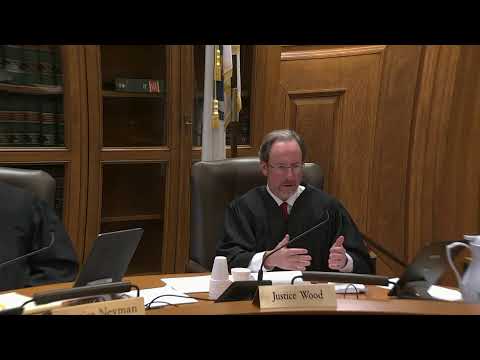
The Appeals Court heard argument Feb. 13 in docket 24P722, a domestic restraining-order appeal in which the petitioner obtained an emergency order and an extension after an incident at a Little League field where the respondent allegedly struck or pounded the car while the parties’ children were present. Attorney Anthony Luzzo, representing the appellant/respondent, urged the appeals panel that the evidence did not support the judge’s finding of an objectively reasonable fear of imminent serious bodily harm and that several findings in the written order diverged from the hearing transcript.
Luzzo acknowledged a fraught relationship and repeated breaches of court communication protocols but stressed there was no prior history of physical violence and no testimony of explicit threats of imminent bodily harm. He highlighted inconsistencies: the judge’s written findings said the respondent testified he called police on May 10; Luzzo said the transcript shows the witness testified he called a friend and believed the date to be May 11. Luzzo asked the panel to find certain credibility and factual-findings clearly erroneous and to remand for clarification.
The panel questioned whether the May incident — the respondent’s pounding on the car window with children inside or knocking on the window, plus public intoxication allegations — could reasonably produce fear of imminent harm even absent prior violence. Appellate counsel noted the petitioner continued to make custody exchanges and to pick up children from the respondent’s residence after the order, which the judge’s findings also referenced.
The judge’s written findings, counsel for the respondent said, also appear to rely on other probate-court filings and separation-agreement terms not developed in the evidentiary hearing; Luzzo argued the use of extrinsic probate docket material in the restraining-order findings compounded the error. The court took the matter under advisement after argument.