Get Full Government Meeting Transcripts, Videos, & Alerts Forever!
Get email alerts on the Property Title Notice topic
No spam. Unsubscribe anytime.
Appeals court hears challenge to default judgment over an unacknowledged deed and notice standards
Summary
Defendant-appellant sought relief from a default judgment, arguing the buyer had actual or inquiry notice of an alleged 2016 superseding deed that named the defendant as co-owner; plaintiff argued registry-search standards and lack of reliable documentary evidence defeat any actual-notice claim.
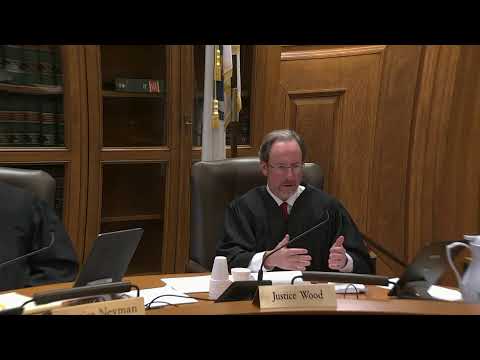
The Appeals Court considered Seed LLC v. Arcadio Francisco Jr. on Feb. 13, a property-dispute appeal that centers on whether a purchaser (Seed LLC) had actual notice of a 2016 deed that the defendant says made him a co-owner. Appellant counsel Andrew Stark argued that verbal statements and a long-standing personal relationship between the parties provided intelligible information that the buyer should have heeded; plaintiff counsel Kim Croa said the registry system and Massachusetts indexing standards protect purchasers who rely on recorded title and that a deed lacking the statutory acknowledgment does not impart constructive notice.
Stark told the panel his client told the buyers multiple times that he was on a subsequent deed and that the buyer’s manager — the plaintiff’s sole member and manager — did not dispute the representations in the affidavits the defense offered to set aside the default. Stark argued that, at the very least, the statements should have prompted further inquiry or short discovery rather than entry of default judgment without fuller factual development.
Seed LLC’s counsel responded that title-search practice uses grantee/grantor indexing and that a purchaser reasonably relied on the registry search results. Croa emphasized that the recorded 2016 instrument lacked the statutorily required acknowledgment and therefore — under Massachusetts indexing and deed law cited in briefing — does not convey constructive notice; she argued the defendant offered no verified documentary evidence in the record to show the buyer had actual knowledge of the precise instrument.
The justices questioned the parties on the interplay between verbal intelligence and documentary search practice, asking whether anything short of actual written and acknowledged recordation should impose a duty to search a deed by address or otherwise. Stark urged that the recorded instrument was discoverable online and that a short inquiry could have uncovered it; the court took the arguments and submitted the case for decision.