Get Full Government Meeting Transcripts, Videos, & Alerts Forever!
Get email alerts on the Criminal Appeals Identification topic
No spam. Unsubscribe anytime.
Appeals court hears challenge to conviction based on surveillance ID, prosecutor’s closing statements
Summary
The Massachusetts Appeals Court heard argument in Commonwealth v. Gonzales over whether surveillance images and prosecutorial misstatements rendered the conviction unsafe and whether a purse-snatching charged as unarmed robbery required proof of force under state law.
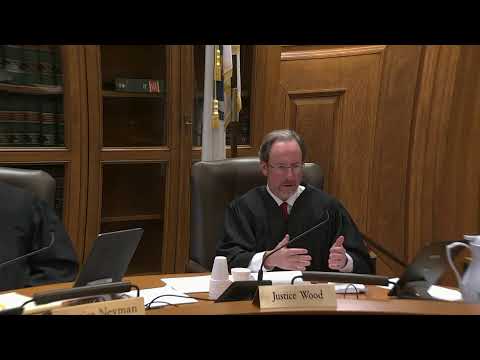
The Massachusetts Appeals Court heard oral argument Feb. 13 in Commonwealth v. Gonzales, a criminal appeal in which defense counsel argued the conviction rests on thin evidence and prejudicial misstatements in the prosecutor’s closing argument. Elaine Fraunhofer, counsel for appellant Angel Gonzales, told the three-justice panel that the prosecutor repeatedly overstated the evidence, including statements that a cooperating witness had “corroborated” Gonzales for all four purse-snatching incidents and that there was “no evidence” the crimes continued after the defendant’s arrest.
The argument centered first on identity. Fraunhofer asked the court to review surveillance stills and photographs de novo and to conclude the Commonwealth’s evidence did not prove identity beyond a reasonable doubt. She told the panel the victim’s description was vague and that “there’s simply no evidence” that the defendant is the person shown in the Big Y video, pointing to differences in skin tone, nose shape and other facial features in the record images.
Assistant District Attorney Sean Buxton, arguing for the Commonwealth, replied that the proper standard is de novo review of sufficiency “taking all of the evidence in the light most favorable to the Commonwealth and drawing all inferences in its favor.” Buxton said the video provided clear, frontal and profile images and that the jury could reasonably infer the surveillance images and the defendant sitting in court were of the same person.
The panel also explored whether the prosecutor’s closing remarks were prejudicial and whether the trial judge’s postargument instructions cured any error. Fraunhofer said the prosecutor twice told jurors the cooperating witness had tied Gonzales to all of the incidents and argued that, even though jurors acquitted on three counts, the misstatements could have improperly bolstered the remaining conviction. Buxton acknowledged the statements were erroneous but argued the judge’s general instructions that “closing arguments are not evidence” and instructions on the burden of proof, given shortly after the closing, insulated the verdict from prejudice.
A separate legal issue discussed was whether the Big Y count should be treated as unarmed robbery or as larceny. The justices and counsel examined Lattimore and Jones-type authority distinguishing purse snatching from pickpocketing: the court’s cases require awareness produced by force that “relieved [the victim] of the property,” not mere later discovery of the loss. Fraunhofer argued the evidence of force here was at the cusp and contested whether the victim’s report of a “brushing” sufficed to show the force required for unarmed robbery. Buxton cited cases holding that a quick taking that produces awareness can satisfy the force element for unarmed robbery.
The court pressed both counsel on the standard of review and whether this record allowed the panel to conclude no reasonable juror could have found identity beyond a reasonable doubt. After questioning, the panel took the case and the parties submitted it.
The appeals argument did not include a decision. The court indicated it would decide on the record after review.