Get Full Government Meeting Transcripts, Videos, & Alerts Forever!
Get email alerts on the District Budget topic
No spam. Unsubscribe anytime.
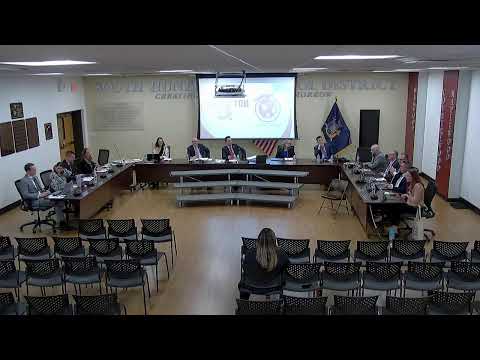
South Huntington board hears 2025-26 budget preview; district cites roughly $2.7 million potential state-aid increase
Summary
District officials presented a 2025-26 budget preview to the South Huntington Board of Education, outlining projected increases in foundation and expense-based state aid, pension and healthcare cost expectations, facility transfers and the timeline toward the May budget vote.
South Huntington Union Free School District officials on Wednesday presented a draft 2025-26 budget showing a projected increase in state aid of about $2.7 million and confirming facilities and pension costs that will shape the district’s spending plan.
District official Mr. Conway summarized the district’s preliminary revenue picture, saying the governor’s proposed aid numbers would place foundation aid near $57,900,000 — an increase he described as “just over 3%” — and expense-based aids near $20,600,000, together amounting to roughly a $2.7 million increase from current-year totals.
The board heard why that matters: foundation aid remains the single largest source of state support while expense-based aids reimburse specific categories — for example, transportation and building costs — after the district spends the money. Mr. Conway also reminded the board that the district used reserves and fund balance in the current year, noting a $1.5 million retirement-reserve usage and $2.7 million in appropriated fund balance to balance 2024-25 operations.
Officials reviewed expenditure pressures that will affect next year’s budget. The district’s employer contribution rates for state pension systems remain a factor: the transcript-recorded estimate for one retirement system was about 16.5 percent, while the Teachers’ Retirement System contribution was listed near 9.59 percent. Health-insurance premiums were described as “close to flat” for the most recent year, but presenters warned they must project costs well into the 2025-26 fiscal year because health premiums use a January–December base while the district’s fiscal year runs July–June.
Transportation also drew attention. The district continues an ongoing vehicle replacement plan to reduce maintenance costs, but presenters flagged the state’s zero-emission bus mandate as an unfunded requirement with major cost and infrastructure implications: bus purchases must be zero-emission starting in 2027, and the statewide goal for all buses to be zero-emission was cited for later years.
Superintendent and cabinet presenters emphasized priorities that will guide the budget: keeping the largest share of spending in direct student-program costs, investing in facilities work and maintaining safety and social-emotional supports. The presentation noted recent capital work funded by a voter-approved $4 million transfer to capital and showed several completed campus projects.
The board was given a timeline of budget work sessions leading to the annual May 20 budget vote and school board election. Administrators said they will return to upcoming meetings with more detailed line-item proposals and recommended transfers to capital for 2025-26.
The presentation is advisory; no final budget vote was taken Wednesday. Board members asked clarifying questions and scheduled additional budget work sessions in March ahead of the public vote in May.