Get Full Government Meeting Transcripts, Videos, & Alerts Forever!
Get email alerts on the State Legislation Update topic
No spam. Unsubscribe anytime.
Lobbyists brief commissioners on 2025 bills: coal transition funds, factory‑built housing, juvenile detention and other measures
Summary
Capital Success Group gave a legislative update covering bills affecting Pueblo County, including draft coal transition funding, factory‑built housing code changes, juvenile detention funding, child‑care assistance cost risks, and proposed additions to the statutory definition of clean energy.
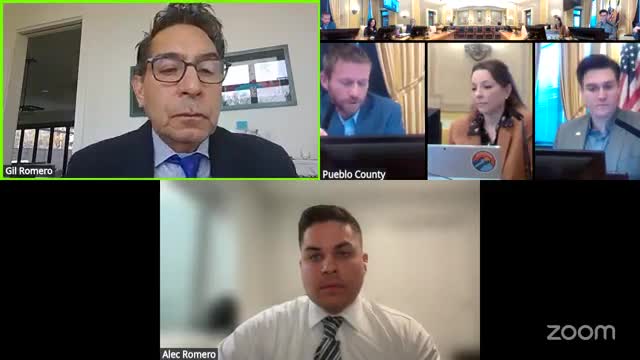
Representatives from Capital Success Group briefed Pueblo County commissioners on Feb. 4 about several 2025 state bills that could affect county finances, planning and services, and asked commissioners to consider testifying or taking positions on certain measures.
Gil (Capital Success Group) opened the briefing by noting the state’s fiscal context: “the state's facing a billion dollar shortfall this year,” and said the budget gap could block bills that carry fiscal notes from reaching final debate. He and other presenters recommended close monitoring of measures that could shift costs to counties.
Key bills discussed
- Senate Bill 25037 (coal transition communities): The firm said the bill would create dedicated resources for communities affected by coal‑plant closures, including a $15 million direct compensation fund for lost tax revenue, up to $75 million per year for economic recovery grants, and greater flexibility in using settlement funds tied to plant closures. Presenters said Pueblo, identified as a tier‑1 coal transition community, would have priority access to these funds.
- Senate Bill 25002 (factory‑built housing): The presenters said the bill would create regional building codes for factory‑built housing and limit some local controls over modular housing standards while preserving local authority over zoning and land use. The firm noted the bill could preempt county‑level building standards for factory‑built units once the state housing board adopts uniform codes.
- House Bill 251146 (juvenile detention bed cap): The briefing said the bill raises the statewide juvenile detention bed cap for FY25‑26 from 215 to 254, redirects roughly $1.98 million annually toward community‑based alternatives, and requires population‑based funding allocations; it also includes a floor appropriation of at least $1.35 million annually to cover projected populations.
- House Bill 1164 (concealed carry permit changes): The firm noted this bill would allow an 18‑year‑old permitted to possess a handgun to conceal it and would change concealed‑carry permitting from five‑year to lifetime permits; presenters flagged this as a bill the county might receive constituent questions about.
- House Bill 251040 (add nuclear energy to clean‑energy definitions): The bill would expand statutory definitions of “clean energy” to include nuclear power for purposes of clean energy financing and targets; presenters said companion workforce amendments were expected.
- Additional measures: water quality/TMDL guidance (bill briefing indicated a sponsor‑driven amendment may remove CDPHE to avoid a fiscal note), and a previously introduced bill that would expand some counties’ boards from three to five commissioners (sponsors indicated it may be reintroduced).
Several commissioners said they are cautious about bills that reduce local control or shift costs to counties. Commissioner Paula McPheeters emphasized protecting local authority: “Anytime I see a bill that takes away our local control and grants it to the state of Colorado, I'm a hard no,” she said. Commissioners asked the lobbying team to circulate a concise weekly tracker of key bills and to provide details on amendments before the county takes positions.
The presenters said Capital Success Group can help arrange virtual testimony, send bill summaries and draft letters, and will follow select items closely; they specifically flagged the coal transition bill as a top priority and said they would notify commissioners when committee hearings occur.
Ending: Commissioners requested a short weekly “hot list” of bills with bill numbers, brief summaries and suggested actions; the firm agreed to provide a summary for the county by the end of the week.