Get Full Government Meeting Transcripts, Videos, & Alerts Forever!
Get email alerts on the Childcare Funding Ccap topic
No spam. Unsubscribe anytime.
Pueblo County proposes lowering paid-absence allowance in CCAP amid budget shortfall; commissioners back letter to state lawmakers
Summary
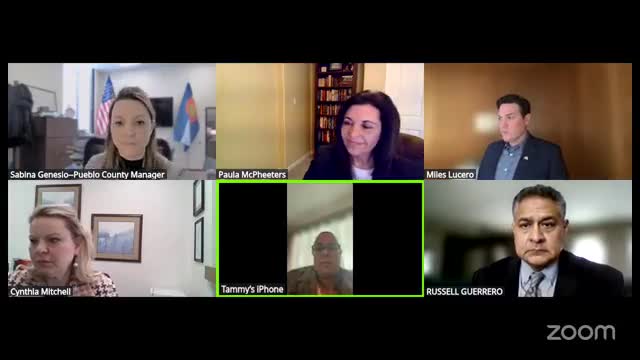
Tammy Torres, director of the Department of Human Services, told commissioners Jan. 30 that Pueblo County placed CCAP on an enrollment freeze Jan. 1 because of budget constraints and proposed reducing paid absences to pre-pandemic levels to reduce a projected overspend; staff also asked the board to support a letter to the Joint Budget Committee seeking supplemental funds.
Tammy Torres, Director of Pueblo County Department of Human Services, told the Board of County Commissioners on Jan. 30 that the county placed the Colorado Child Care Assistance Program (CCAP) on an enrollment freeze effective Jan. 1 because of budget constraints tied to a statewide provider rate change. Current families remain active if eligible, but new families cannot be enrolled while the freeze is in effect.
Torres proposed changing Pueblo County’s CCAP county rate plan to reduce the number of paid absences counties cover to pre-pandemic levels as a short-term budget mitigation. Under the proposal, tier 1 and tier 2 providers would have paid absences reduced from six to three per month; tiers 3 through 5 would move from seven to four paid absences per month. Torres said Pueblo County historically tended to underspend CCAP but that a provider-rate increase required by the state caused the county to project a roughly $1 million overspend for the fiscal year unless changes are made.
Staff said they have not filled two vacant positions in the CCAP unit and that there are about 800 children enrolled in CCAP in Pueblo County. Torres provided a cost example: for a 3-month-old in a tier 1 provider the absence cost per day is $58.43; she said implementing the proposed change starting March 1 could produce savings that, depending on usage, might amount to roughly $400,000–$500,000 for the remainder of the state fiscal year, though exact savings are uncertain.
Torres said 94 licensed providers could be affected: she reported 36 in tier 1, 34 in tier 2, 5 in tier 3, 18 in tier 4 and 4 in tier 5, plus 22 providers not affected because they are not state licensed (for example, family providers such as relatives). She told the board staff had not yet received provider feedback and said they could solicit input if the board requested it.
Commissioners asked for more precise estimates. Staff said they can use an internal tool developed in Adams County to break down historical attendance and estimate dollar impacts; staff will travel to Adams County to obtain and test the tool, then return to the board with refined projections. Staff estimated the state will take about two weeks to approve a county rate-plan change once submitted; staff said if the board approves a change quickly, a March 1 start date might still be feasible, otherwise an April 1 start would be necessary.
Separately, Torres asked whether the board would send a letter to the Colorado Joint Budget Committee (JBC) in support of a supplemental funding request the Colorado Department of Early Childhood (referred to by staff) has submitted to the JBC. Torres said the department submitted a $10,000,000 supplemental request to the JBC to help cover overages in counties. Commissioners expressed support for sending a letter and asked staff to emphasize that CCAP has been an established county service and that reallocation or supplemental funds should prioritize the most vulnerable children. Staff said they would add that emphasis and circulate a revised draft.
Torres also noted a federal rule change slated for fiscal year 2026 expected to require payment based on enrollment rather than attendance, which the director said should stabilize provider payments in the longer term but will not help the current fiscal-year shortfall.
No formal vote to change the county rate plan or to send the letter was recorded at the Jan. 30 work session; commissioners gave staff direction to obtain more precise data, consult providers as appropriate, revise the county rate plan, and circulate and refine the proposed JBC letter prior to submission.