Get Full Government Meeting Transcripts, Videos, & Alerts Forever!
Committee hears rising concerns over 'stranded minerals' as carbon‑capture projects advance
Summary
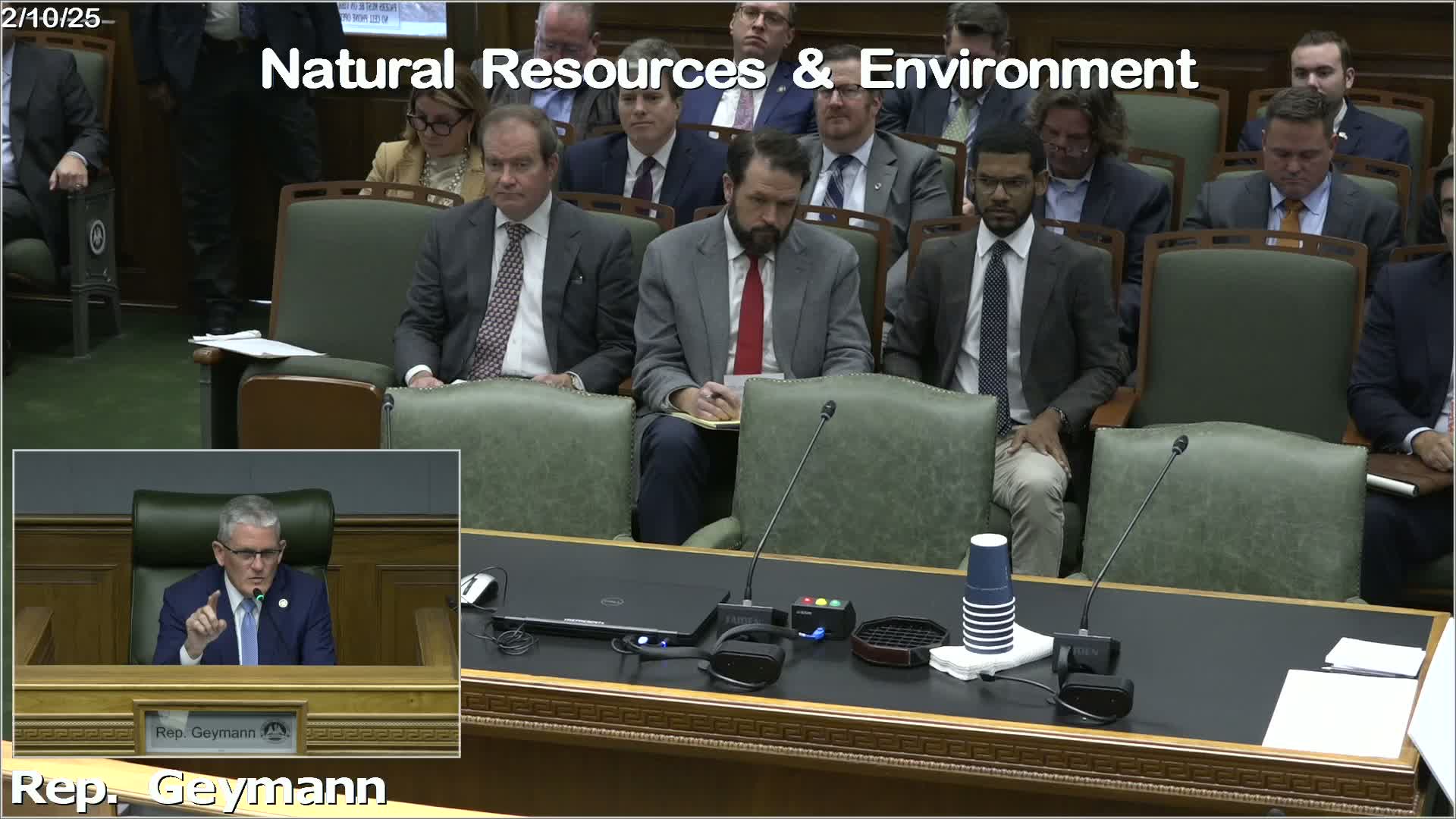
Baton Rouge — Lawmakers and stakeholders on the House Natural Resources and Environment Committee spent several hours in February reviewing how proposed carbon capture and storage projects could render subsurface mineral rights inaccessible and whether existing state rules protect landowners, mineral servitude holders and local governments.
Baton Rouge — Lawmakers and stakeholders on the House Natural Resources and Environment Committee spent several hours in February reviewing how proposed carbon capture and storage (CCS) projects could render subsurface mineral rights inaccessible — so‑called “stranded minerals” — and whether Louisiana’s current rules and permitting practices protect landowners, mineral servitude holders and local governments.
The committee convened to consider House Study Resolution No. 6, filed by Representative Jack McCormick (sponsor), which asks the state to study how CCS unitization and permitting interact with private mineral rights and local revenues. The hearing drew regulators from the state Department of Energy and Natural Resources (DENR), industry trade groups, LSU researchers and law professors, mineral‑servitude owners and parish officials.
Why it matters: CCS projects in Louisiana are being proposed at scales and depths that stakeholders say differ from traditional oil‑and‑gas units. Witnesses warned projects can cover thousands — in some testimony, tens of thousands — of acres and may inject CO2 into multiple subsurface intervals. That scale and geological uncertainty could complicate future oil and gas recovery, pit surface owners against mineral owners, and affect parish severance tax revenue.
“If there was one cookie‑cutter, one size‑fits‑all solution to this problem, we wouldn't be here talking about it right now,” Dustin Davidson, deputy secretary at the Department of Energy and Natural Resources, told the committee, summarizing DENR’s view that decisions will be highly project specific.
Regulatory framework and DENR’s view
Blake Campbell, executive counsel for DENR, told the committee the state’s unitization rules require consent by a supermajority of acreage in a proposed storage unit; witnesses clarified the law uses a 75% acreage consent threshold in practice. Campbell and Davidson said the department views many technical questions…
Already have an account? Log in
Subscribe to keep reading
Unlock the rest of this article — and every article on Citizen Portal.
- Unlimited articles
- AI-powered breakdowns of topics, speakers, decisions, and budgets
- Instant alerts when your location has a new meeting
- Follow topics and more locations
- 1,000 AI Insights / month, plus AI Chat