Get Full Government Meeting Transcripts, Videos, & Alerts Forever!
Get email alerts on the Housing Rentals topic
No spam. Unsubscribe anytime.
Council advances overhaul of short-term rental rules; first reading approved, occupancy capped and enforcement tightened
Summary
City council read a revised short‑term rental ordinance for the first time and laid it over for final reading, approving several enforcement changes including mandatory inspections, lower maximum occupancy and stricter citation rules.
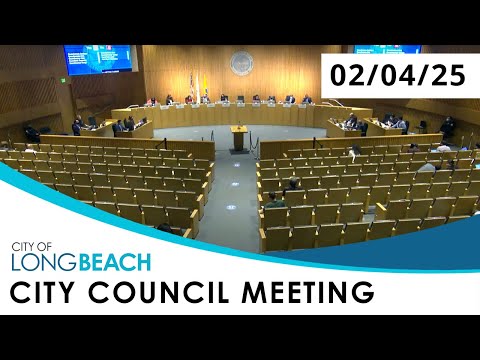
The Long Beach City Council conducted first reading of an amended short-term rental ordinance on Feb. 4 and laid the measure over to the council’s next regular meeting for final reading. The council also directed staff to submit the ordinance amendment to the California Coastal Commission for a conformity finding.
Staff said the proposed changes focus on enforcement and public-safety concerns rather than wholesale changes to hosting policy. Key technical updates in the draft ordinance include requiring safety inspections for every new registration, increasing application fees to fund enforcement and adding an additional inspector, and setting stricter citation rules. The draft reduces maximum occupancy for short‑term rentals from 10 guests to 8, raises the time window for counting repeat violations from 12 to 18 months, and provides that citations involving violence trigger immediate enforcement and count as double. Staff also said registrations will be denied or not renewed if property-related code-enforcement fees are owed, and operators who fail to respond or remedy violent incidents can have registrations suspended or canceled.
Code-enforcement manager Scott Baldwin described the petition process that allows residents to seek a ban on unhosted short‑term rentals in defined census-block areas. The ordinance clarifies how mailed petitions are counted, and it directs the department to develop publicly available petition procedures. Baldwin told council that the city currently holds about 700 registered short‑term units, that the unhosted cap citywide is 800 and that the coastal-zone cap is 350; hosted units (no city cap) numbered roughly 260 in staff figures shared during the hearing.
The item drew broad public comment from hosts, neighbors and housing-advocacy groups. Better Neighbors LA urged the council to move to a "hosted-only" model and to add a private right of action, while multiple hosts asked council to strengthen enforcement against bad actors rather than add new restrictions that would penalize compliant hosts. Several neighbors described persistent noise incidents and urged the city to improve hotline response and after‑hours enforcement. One speaker said she had made more than 25 hotline calls and received little enforcement action.
Christopher Koontz, director of the sponsoring department, said the city has increased staffing and is contracting with an outside vendor to improve hotline and listing scraping services; he said staff can meet inspection timelines in the amended ordinance. Councilmembers said they supported giving staff more enforcement tools but acknowledged remaining community concerns about petitions, clustering and resourcing for enforcement.
Council action: the council read the ordinance for the first time, accepted the proposed amendments and laid the item over to the next regular meeting for final reading; the council also adopted a resolution directing the city manager or designee to submit the amendment to the California Coastal Commission. The clerk recorded the outcome as "Motion is carried." The ordinance number was not specified on the floor.
Why it matters: The changes tighten enforcement, shorten cure periods and lower maximum occupancy while clarifying the petition process that allows neighborhoods to seek geographic limits on unhosted rentals. Advocates on both sides told council enforcement resources and response times will determine whether the ordinance improves neighborhood quality of life without unduly harming hosts who say they rely on rental income.