Get Full Government Meeting Transcripts, Videos, & Alerts Forever!
Get email alerts on the Zero Emission Fleet topic
No spam. Unsubscribe anytime.
Long Beach council asks city manager to pursue 100% zero-emission refuse fleets by 2032, requests 90-day report
Summary
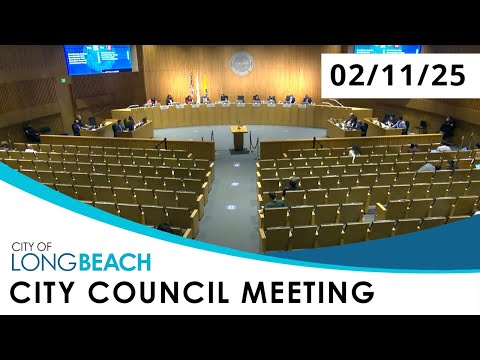
The City Council voted Feb. 11 to direct the city manager to pursue strategies to convert Long Beach's refuse fleet to zero-emission vehicles, prioritize local job creation, and return with a 90-day implementation report.
The Long Beach City Council approved a motion Feb. 11 directing the city manager to pursue strategies to accelerate the transition to zero-emission (ZE) refuse trucks for both city-owned and private refuse fleets and to report back in 90 days on progress. The motion asks staff to clarify the city's zero-emission vehicle and infrastructure policy, identify funding and grant opportunities, and recommend procurement approaches that prioritize local, union jobs through apprenticeship and hiring preferences.
Councilmembers and speakers emphasized that the South Coast Air Basin faces some of the worst air-quality outcomes nationally and that heavy-duty diesel trucks are disproportionate contributors to NOx and particulate pollution. Supporters argued that refuse trucks, because of fixed routes and predictable duty cycles, are well-suited to electrification. The motion calls on the city attorney to draft a resolution stating the city's policy position that future exclusive franchise agreements with waste haulers should be prioritized when haulers commit to a 100% zero-emission refuse fleet by 2032.
Speakers at the public hearing included labor, environmental-justice groups, business representatives and residents. Labor and business groups noted opportunities to stabilize costs and create local jobs by leveraging public procurement and training programs. Environmental-justice groups highlighted health impacts in neighborhoods nearest truck routes and asked the city to ensure equity in the transition. A representative of the Apartment Association of California committed industry support and urged coordination to avoid rate shocks for renters and property owners.
Councilmembers asked staff to ensure safety planning (for battery systems and emergency responses), coordinate with Southern California Edison on grid and charging planning, and explore incentives and financing strategies that could lower first-cost barriers for haulers.
Council members voted to approve the motion; staff will return with a 90-day report that identifies funding sources, outlines infrastructure needs, and sketches a policy framework for franchise agreements and procurement that prioritizes local hiring and apprenticeships.