Get Full Government Meeting Transcripts, Videos, & Alerts Forever!
Get email alerts on the Housing Inclusionary topic
No spam. Unsubscribe anytime.
Long Beach council advances citywide inclusionary housing ordinance with phased rollout and tweaks to affordability mix
Summary
After hours of testimony from residents and developers, the City Council approved changes to the citywide inclusionary housing proposal, directing staff to finalize an ordinance that expands the policy beyond downtown and midtown, phases compliance, and sets differing affordability mixes by submarket to meet state housing goals.
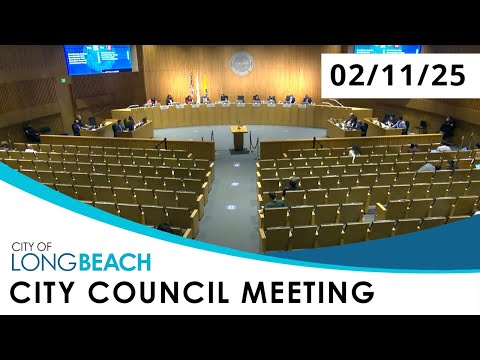
The Long Beach City Council voted to advance a citywide update to the municipality's inclusionary housing policy on Feb. 11, 2025, directing staff to finalize an ordinance that expands the requirement beyond the existing downtown and midtown zones and phases implementation across the rest of the city.
City planning staff and council members framed the measure as a tool to produce more permanently affordable units while meeting the city's state-required Regional Housing Needs Assessment targets and affirmatively furthering fair housing. Under the direction approved by the council, new multi-unit projects of 10 or more units would be subject to inclusionary requirements, applied by geographic submarket, with a multi-year phase-in schedule for areas outside downtown and midtown.
City staff told the council that the proposal responds to recent housing production patterns: Long Beach has seen record numbers of entitlements but remains short of state targets for very-low- and extremely-low-income housing. Staff described changes made after public outreach and formal hearings: the revised approach removes moderate-income set-asides for rentals, instead focusing on very-low and low-income units; it establishes five static submarket areas (including separate downtown and midtown submarkets) and applies different percentages and mixes in each; and it phases in rental requirements over three years (except downtown and midtown, already phased in).
During the public hearing more than 30 people spoke. Residents, tenant advocates and housing groups urged deeper affordability (requests included an 11% very-low plus 5% extremely-low target citywide and elimination of the phase-in). Dozens of residents described rent burden, displacement risk, and household instability. Developers and representatives of housing-industry groups urged caution, citing feasibility and the risk that overly high requirements could reduce overall housing production. Several speakers asked for clear rules on alternative compliance, in-lieu fees, and a council role on appeals.
Council members asked staff to refine the mechanics. Staff said higher than ~15% inclusionary rates would require a new economic feasibility study under state law (and might hurt production). They also explained why the proposed mix removed moderate units: in Los Angeles County the federal high-cost adjustment makes low-income thresholds substantially closer to moderate-income thresholds, while rents for moderate units are often much higher than rents tied to low-income limits.
The council adopted a set of friendly adjustments during deliberations. Members asked that alternate-compliance approvals remain appealable to council (staff had proposed shifting approval to the Planning Commission); that staff return with a one-year implementation report; and that the council direct staff to allow a modest adjustment to the high-resource submarket so the top row effectively reaches parity (12% total) while preserving a priority for very-low-income units in those higher-opportunity neighborhoods. The ordinance will be read for the first time and placed on the calendar for final reading at the next regular council meeting, and staff will return with the drafted ordinance reflecting tonight's direction.
Council members emphasized the dual goals that guided the vote: to expand affordable housing across all neighborhoods and to avoid inadvertently reducing housing production in a market already under pressure. Staff said they will monitor outcomes and review the policy every three to five years.
The council also directed staff to: (1) require recording of the regulatory agreement earlier in the permitting process; (2) allow in-lieu fees to fund a broader set of affordable-housing tools (such as first-time homebuyer programs or community land trusts); (3) require ownership inclusionary units be sold to first-time buyers; and (4) exempt projects that restrict a majority of units to low- or very-low-income households from the inclusionary requirement so stand-alone deeply affordable projects can access subsidies.
The City Council and staff stressed this ordinance is one of several tools (density bonuses, subsidies, vouchers, and targeted programs) the city will continue to use to meet its RHNA obligations and to reduce concentrated poverty.