Get Full Government Meeting Transcripts, Videos, & Alerts Forever!
Get email alerts on the Planning And Zoning topic
No spam. Unsubscribe anytime.
Planning commission backs Waterfront Drive subdivision, seeks council direction on repurposing former school and defining 'low‑impact' businesses
Summary
Planning commission recommended subdividing a large waterfront parcel into two speculative buildings and asked council whether to pursue a legal definition to allow limited commercial uses in former church and school buildings in residential areas.
Munhall's planning commission recommended council approve a subdivision on Waterfront Drive that would split a large parcel into two speculative buildings and begin construction in March, and it asked council for direction on whether to explore legal changes to allow "low‑impact" businesses in former schools and churches.
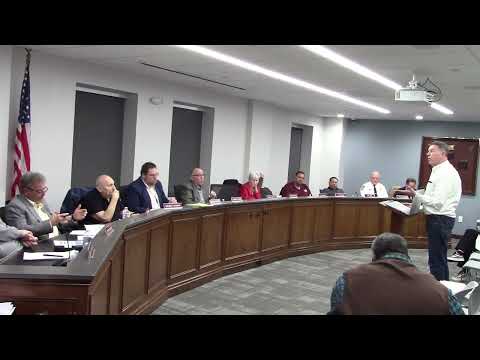
At a planning‑commission report to council, a commission member said developers plan to divide the Waterfront Drive parcel to build two spec buildings, with work expected to start in March. "It'll actually clean up the property ... it'll be an eyesore no more," the member said. The commission recommended approval of the subdivision pending council action.
Separately, the commission asked council whether it wants planners and the borough solicitor to draft a legal definition for "low‑impact business" uses in buildings currently zoned for essential facilities (churches, schools, similar uses). The planning commission said a developer had lost funding while waiting for permit and policy questions to be resolved and is now proposing a mix of small, low‑impact occupants such as a robotics office, a carpentry shop and small machine or repair shops. The commission said asbestos and construction costs had driven the developer to consider alternative uses for the school building.
Councilors raised concerns about neighborhood compatibility and the risk of spot zoning. "Legally, is it allowed to even be put in there? Because ... is it spot zoning putting that business right in the middle of a residential area?" one councilor asked. The planning commission and solicitor recommended that council decide whether it wants staff and the solicitor to craft a legal definition and return with proposed ordinance language and public‑engagement plans.
Council directed planning staff to consult with the borough solicitor (referred to in discussion as Mr. Vashovic) and to continue work drafting a recommended definition and legal approach, with the expectation of public input and a formal recommendation returned to council. The planning commission also asked council to consider reverting the commission membership from nine to seven members to ease quorum problems; council agreed to consult the solicitor on the ordinance change and to discuss at the next meeting.
Ending: Council asked planning staff and the solicitor to draft a recommended definition of "low‑impact business" with legal analysis and public‑meeting plans, and to return the Waterfront Drive subdivision for formal action when paperwork is complete.