Get Full Government Meeting Transcripts, Videos, & Alerts Forever!
Get email alerts on the Outdoor Activities topic
No spam. Unsubscribe anytime.
City‑run Outdoor Inactive program expands for Pomona Unified students; district funding limits participation to enrolled students
Summary
The City of Pomona’s Outdoor Inactive program, funded by Pomona Unified and run by the city, runs year‑round free activities for PUSD students at 11 parks; city and district officials told trustees the funding source limits participation to district students, though other city programs are available to non‑PUSD residents.
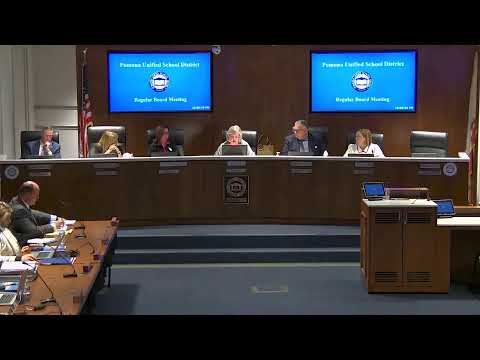
A City of Pomona recreation supervisor briefed the Pomona Unified School District board on Feb. 12 about Outdoor Inactive, a year‑round recreation program funded by the district and administered by the City of Pomona’s Community Services Department that offers free sports, nature activities and field trips to PUSD students.
Jordan Sanchez, a recreation supervisor with the City of Pomona Community Services Department, said Outdoor Inactive is offered to Pomona Unified students only and is free for participants. “The program is held at 11 different parks,” Sanchez told the board, describing a rotation model intended to place programming near PUSD schools. He said the program serves ages 4 through 17 and has registered roughly 6,000 duplicated registrations since it began with district funding; attendance or touchpoints have risen each fiscal year as program support increased.
Sanchez listed activities that include introductory sports for ages 4–7, year‑round youth sports leagues (fall, winter, spring and summer), a nature club that runs hikes and educational sessions, skateboarding classes, swimming lessons and field trips to regional public lands and stadium events. He also described a partnership with Cal Poly Pomona for attending college athletic events. Sanchez said one of the most popular offerings is the basketball program, which can register more than 200 participants across divisions and runs multiple seasons.
Board members asked whether residents who do not attend PUSD schools can access the program. Lydia Fuentes, a PUSD staff member participating in the discussion, explained the restriction stems from how the program is funded: the district used education‑service funds created after COVID to address students’ social and recreational needs, and those funds are restricted to PUSD students. “This money was completely geared for PUSD students,” Fuentes said, adding that the city has separate recreation programs funded through the city’s general fund that serve non‑PUSD residents.
Sanchez and Fuentes described other operational details: the city contributes staff, transportation and recruitment support; the program team has attended 33 PUSD meetings and engages in flyers and outreach at school sites; and program growth has been aided by increased district funding, which allows additional coaches and expanded Saturday offerings. Sanchez said not all 11 parks accommodate full‑size soccer fields; programming is selected by site to match facilities (e.g., skateboarding on flat courts).
Trustees suggested the district and city produce written materials explaining eligibility and funding so parents understand why programs are limited to PUSD students and how non‑district resident families can find alternative city offerings. Sanchez said materials and flyers are already used for outreach and that the city and district would work on clearer written communications.
Board members thanked the presenters and commended the partnership, and several trustees and staff said they would explore ways to extend or adapt services for broader resident participation if alternative funding can be identified.