Get Full Government Meeting Transcripts, Videos, & Alerts Forever!
Get email alerts on the Land Use Plan Hamilton topic
No spam. Unsubscribe anytime.
Hamilton County debate over ‘buildable area’ rule, Area 9 moratorium put to committee after months of public pushback
Summary
Two related resolutions proposing to base building permits on a site’s net "buildable area" and to impose a moratorium on rezonings in Area 9 drew extensive public comment and were deferred to committee for further work; planners and developers urged more study and stakeholder involvement.
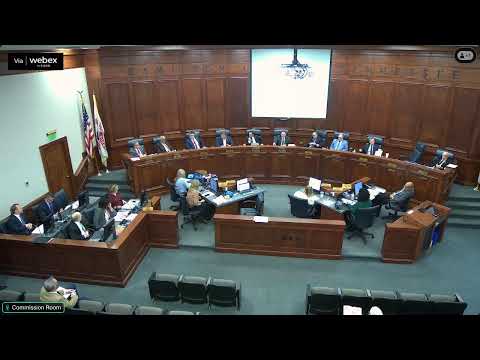
Hamilton County commissioners heard hours of testimony and staff briefing on two related proposals — one to base building permits on a site’s net "buildable area" instead of gross acreage, and another to impose a moratorium on zoning changes in Area 9 until the county’s Plan Hamilton document is adopted — and moved both items to committee for further review.
The net-area resolution, sponsored by Commissioner Highlander, would instruct county staff to subtract non-buildable features such as floodways, steep slopes, easements and decentralized wastewater system footprints from a property’s gross acreage when determining whether a lot qualifies for a building permit. Brian Schultz, a planner with the Regional Planning Agency (RPA), said RPA is preparing a draft report comparing gross and net density and that the agency’s work shows many technical choices are required before any ordinance change.
"What we're drafting would be an amendment to the zoning code," Schultz said, adding the analysis compares Hamilton County to peer counties and highlights questions about which features should be excluded and whether exclusions are defined by pre- or post-grading conditions. Schultz noted Williamson County is a rare local example that excludes acreage set aside for decentralized sewer from density calculations.
Why it matters: proponents said using net buildable area would limit subdivisions that place many lots on land where large portions are unbuildable, protecting rural character and reducing environmental risk; opponents — including developers, builders and realtors — said the change would reduce developable land, raise housing costs and should not move forward before Plan Hamilton and further RPA analysis.
Home Builders Association and realtor representatives packed the public comment section, warning that tightening buildable-area rules would increase land costs and exacerbate an existing affordable-housing shortage. Julian Bell of the Home Builders Association told commissioners the proposals could push more workers to live outside Hamilton County.
Several commissioners urged caution. "I feel like we're kicking the can down the road," Commissioner Chauncey said of repeatedly deferring elements of Plan Hamilton, while Commissioner Mackey and others said density and sewer capacity are linked and require a long-term infrastructure plan. Commissioner Sharp argued higher density reduces per-household public costs and urged the county to be honest with residents about trade-offs.
On the moratorium resolution, Commissioner Hollander said the intent was not to bar lawful development but to preserve existing zoning in Area 9 until Plan Hamilton is adopted. RPA staff reported there were no county rezonings scheduled in Districts 9 or 10 for the immediate future; commissioners nonetheless agreed to defer the moratorium proposal so RPA and elected officials could continue stakeholder work.
Outcome and next steps: Both resolutions were deferred to the zoning committee and the commission’s February 26 agenda session for committee consideration, with commissioners asking RPA and county staff to return with refined language and more public outreach. Several commissioners and numerous members of the building and realty trades asked to be included in committee discussions.
Public comment and technical concerns: Speakers from neighborhood groups raised environmental and infrastructure concerns tied to decentralized wastewater systems, citing potential impacts on groundwater and downstream waterways. Several residents and builders asked how the county would reconcile long-standing property tax assessments with possible restrictions that change a parcel’s development value.
What was not decided: No vote to adopt code language or to impose a moratorium was taken. Commissioners explicitly declined to move either resolution to a final vote this session and asked staff and RPA to return with additional analysis and draft ordinance language for committee review.