Get Full Government Meeting Transcripts, Videos, & Alerts Forever!
Get email alerts on the Public Safety topic
No spam. Unsubscribe anytime.
Gilpin County sheriff details staffing, jail programs and seeks opioid and co-responder grants
Summary
Sheriff Kevin Armstrong presented Gilpin County’s 2024 year-end public-safety report, highlighting dispatch staffing gains, digital-media and evidence workloads, jail population trends and voluntary treatment programs, and sought grant funding for telehealth and MAT programs.
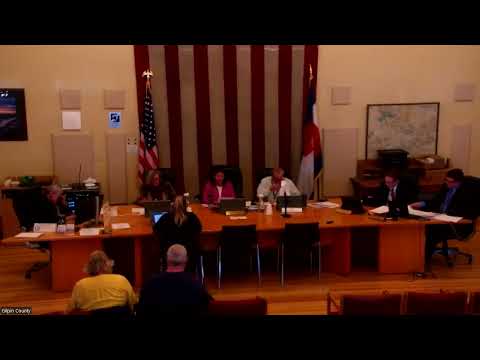
Sheriff Kevin Armstrong presented Gilpin County’s 2024 year-end report to the Board of County Commissioners, reviewing dispatch and calls-for-service, victim-services caseloads, evidence and digital media inventory, body-worn camera volumes, and jail operations and programs.
The report said the county’s 911 center handled 4,095 emergency calls in 2025 (about 11.29 calls per day) and 21,272 inbound non-emergency calls. Armstrong thanked dispatch staff and noted the department recently increased the dispatch roster to six employees, with two in training.
The sheriff outlined evidence and digital-media work: 13,518 body-worn-camera videos were uploaded in the year and the department’s digital media inventory now includes more than 32,000 videos from body cams and other sources. Armstrong said staff are working through older evidence that must be disposed of under statutes and that a digital media technician now supports discovery and evidence disposition processes.
On detention, Armstrong reported 738 bookings for the year (about two per day) and an average daily population of 30.61. He said the detention facility was designed for 55 beds and the department prefers to keep the population near that figure to meet safety and the newer jail standards. He also described programs available to people in custody: Jail-Based Behavioral Health Services (JBBS) and a Medication-Assisted Treatment (MAT/MAP) program. “Both programs ... are optional and voluntary,” Armstrong said, and staff work to reestablish medications and Medicaid prior to release.
Armstrong and staff discussed funding for inmates held for gaming-related arrests and the reimbursement rate the county receives: $75 per day per prisoner from state impact funds, a figure Armstrong said does not fully cover per-inmate costs. He reiterated that many jail programs are grant-funded and that the department documents and seeks reimbursement where possible.
Commissioners and staff discussed a co-responder telehealth program that has equipment purchased but not yet launched. Sergeant Matthews and grant staff said vehicles will be equipped with ruggedized laptops and AT&T modems; county staff proposed adding T‑Mobile subscriptions and antenna work to improve redundancy and coverage in parts of the county. The board discussed two grant avenues: a Colorado Opioid Abatement Council (COAC) infrastructure opportunity that would fund broadband/telehealth and equipment and a regional GROC (Gateway Regions) opioid-response round that could fund MAT programming. Grant manager and sheriff’s staff told the board the COAC opportunity could provide up to $500,000 for the region and the county is requesting up to $160,000 (about $50,000 per year for MAT and the rest for equipment and data subscriptions).
Commissioner discussion emphasized competitiveness of COAC/GROC awards and the benefit of applying to the regional GROC pool as well. The board voted to approve submission of a COAC application and later to submit the county’s regional GROC application when appropriate.
Why it matters: the report and the grant work affect day-to-day public safety capacity in Gilpin County — from 911 staffing and digital evidence management to programs aimed at reducing recidivism and supporting people with substance‑use and behavioral‑health needs.
Ending: Commissioners thanked sheriff’s staff for the report and asked for more frequent, shorter updates; sheriff’s staff said they will continue improving report generation as new records-management software is implemented.