Get Full Government Meeting Transcripts, Videos, & Alerts Forever!
Get email alerts on the Land Use Conditional Use topic
No spam. Unsubscribe anytime.
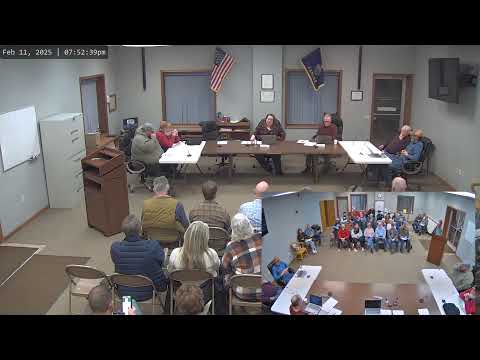
Linn County tables permit for faith-based men’s program after neighbors voice safety, zoning concerns
Summary
The Linn County Planning and Zoning Commission voted to table consideration of Conditional Use Permit (CUP) 25-02, a proposal from Making Disciples Inc. to operate an eight‑month faith‑based residential program called Livingstone’s Lodge for men aged 18–25.
The Linn County Planning and Zoning Commission voted to table consideration of Conditional Use Permit (CUP) 25-02, a proposal from Making Disciples Inc. to operate an eight‑month faith‑based residential program called Livingstone’s Lodge for men aged 18–25.
The item was tabled after the applicant outlined the program and neighbors raised repeated safety, trespass and infrastructure concerns, and staff advised the commission that the required planning staff report was not available. Chairwoman Elizabeth Staten announced the item would be taken up again at the commission’s next meeting, and commissioners moved to table the CUP until that meeting in March.
Ryan Waxock, founder and executive director of Making Disciples Inc., told the commission Livingstone’s Lodge would be a faith‑based nonprofit program designed to “help young men 18 to 25 years old find their identity and purpose through an 8 month long wilderness discipleship” model. Waxock said the program would follow a graduated three‑phase model: about one month camping, four months in a bunkhouse/workshop doing practical skills and agricultural work, and roughly three months in a main residence preparing graduates to return to civilian life. He said the program would screen applicants, require criminal background checks and would not accept participants with violent criminal histories or those placed by courts or parole officers. Waxock said start‑up funding so far has come from private donors, and he identified Heartland Electric Cooperative and the local water district as parties already consulted about bringing utilities to the site. He described an early construction sequence that would begin with utilities and then a bunkhouse/workshop building, with the applicant hoping to break ground on that building within about three months of approval.
Waxock also said he and his wife, Keeley, intended to live on the property in the main residence and that initial staffing would be the two of them, with nonresident staff to be added later as funding allowed. He said program capacity could be as high as 24 participants when fully built out but that a more likely operating level initially would be about 16–18; classes would start in cohorts of no more than six participants every other month.
Dozens of nearby property owners addressed the commission during public comment. Several said the proposal was incompatible with the agricultural district and raised specific concerns about trespass, security, liability for injuries, effects on livestock and wildlife, wastewater and water quality, and loss of rural character. Trenton (last name not specified), a nearby landowner, said, “I’m all excited that there’s anybody that wants to do anything for young men this day and age. . . . But there’s a lot of concerns there.” Margaret Storfer, who said her family owns 100 acres about a thousand feet from the site, stated simply, “I say no.” Mark Jenkins, a property owner directly west of the site, described a recent burglary on his property and said, “24 . . . young men with 2 adults, no supervision . . . 02:00 in the morning, let’s cross the fence,” urging denial on safety grounds. Others raised liability concerns if program participants trespassed on neighboring land, and one commenter cited concerns about septic/sewer handling affecting an on‑site lake.
Commissioners also heard a written zoning analysis offered by resident Anne Johnston during public comment; Johnston said she had prepared a document comparing the request to the Linn County zoning regulations and argued the proposed use did not fit allowed conditional uses in the agricultural district and characterized the lodging described as akin to a long‑term hotel. Johnston provided copies of her document to the commission.
Planning staff notified the commission during the meeting that the file’s staff report—the director’s written evaluation of the CUP and its compliance with local regulations—was missing and that the transition between the departing and newly appointed zoning director had contributed to the absence of a completed staff report. The commission chair closed public comment after staff advice and said the commission lacked the information needed to vote.
A motion to table CUP 25‑02 until the commission’s next meeting in March was made, seconded and carried by voice vote. The commission also voted to table unrelated “old business” for the next meeting because several members were absent and the full packet of materials was incomplete.
The applicant and multiple neighbors were invited to the next meeting; the commission said it would consider a staff report and then accept any additional public comment as directed by the chair at that time.