Get Full Government Meeting Transcripts, Videos, & Alerts Forever!
Get email alerts on the Parks Recreation topic
No spam. Unsubscribe anytime.
Consultants present Youngs Park master plan and skate‑park options; costs range widely, phased approach recommended
Summary
Sequoia Engineering (now part of Baxter & Woodman) presented a conceptual master plan for Youngs Park that centers a proposed skate park and identifies additional park improvements, phased budgets and potential grant sources. Consultants recommended phased work and outlined wide cost ranges depending on facility scale.
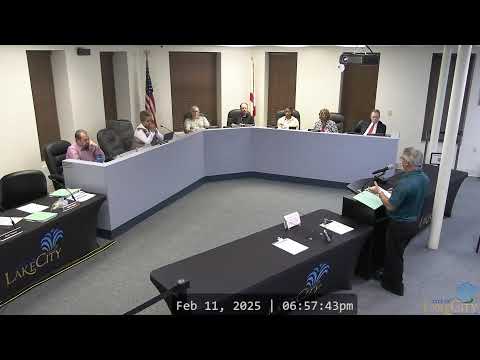
Consultants from Sequoia Engineering, now operating as part of Baxter & Woodman, presented a conceptual master plan for Youngs Park to the City of Lake City board members on Feb. 11, highlighting a proposed skate park and a broader vision for future recreational improvements.
Consultants said the assignment began as a skate‑park feasibility study and expanded into a master-plan scope after reviewing available land and existing facilities. The plan inventories existing assets — a municipal stadium with turf, tennis and basketball courts, playgrounds, restrooms, handball courts and an existing storm pond — and proposes phased improvements including a skate park (proposed site north of the stadium), expanded paved parking behind the stadium, ADA-accessible playground upgrades, a health/fitness track, separate pickleball courts, improved restrooms near the north end of the field, and potential artificial turf at the stadium for multiuse fields.
Consultants presented budget ranges to reflect different scales of construction: a basic concrete skate park with prefabricated elements could be in the roughly $100,000 to $150,000 range, while an elaborate facility (the presenter cited an $8 million example built in Jacksonville) would cost far more. A dirt remote-control vehicle track could be constructed for as little as $25,000–$50,000 with city labor, or several hundred thousand dollars for a fully paved, concession-equipped facility. The consultants recommended a phased approach aligned to available funding.
Funding options discussed included grants (state and federal recreation grants, National Recreation and Park Association resources), and the consultants said their larger parent company’s capabilities increase grant‑writing and 3D‑visualization capacity. The board discussed implementation issues, including whether federal or state grant acceptance could trigger biological or cultural-resource surveys under laws such as Section 106 of the National Historic Preservation Act. Consultants said they are capable of performing cultural and biological resource surveys if triggered, but they did not anticipate such surveys for small‑scale recreational improvements unless a federal/state grant specifically required them.
Board members and staff discussed maintenance and safety considerations: one member noted studies that show higher non‑contact injury rates on artificial turf compared with natural grass and raised heat and infection concerns; another observed an existing RC track at the Southside Sports Complex that receives little use, questioning the need for a second facility. Staff said additional public outreach will occur in future workshops and that they plan to consult youth groups and civic organizations to gather broad input.