Get Full Government Meeting Transcripts, Videos, & Alerts Forever!
Get email alerts on the Public Comment Transparency topic
No spam. Unsubscribe anytime.
Resident urges clearer offender-notice details; board and public dispute housing classification
Summary
During public comment, a Kenosha resident asked why board notices lack background links and questioned a home's classification as single-family versus duplex; board pointed to CCAP and the Wisconsin DOC locator as public records and cited parole-agent assessments.
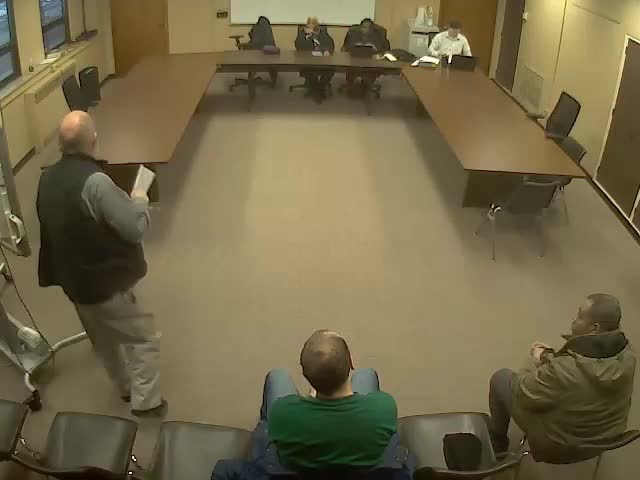
At the Kenosha Offender Residency Board meeting on Jan. 9, 2025, a resident during the public-comment period urged the board to provide more background information in notices about prospective residents, including links to public records, and questioned an offender residency assessment that listed a contested address as a single-family home.
The resident said they did not receive adequate “backup” information about the person being discussed and suggested that letters to neighbors include links to the Circuit Court Access Portal (CCAP) and the Wisconsin Department of Corrections inmate locator. The board responded that information is public and available through CCAP and the DOC locator, with one board member saying, “It’s public record in CCAP. It’s public record through CCAP, and it’s public record through, Wisconsin DOC locator.” The board suggested that those links could be added to future letters.
The resident also challenged the classification of 351150 Ninth Street, saying the property is a duplex with side-by-side entrances and not a single-family home as stated in the offender residency assessment. A board member explained that the parole agent conducts an offender-residency assessment that considers whether a property is a single-family home or an apartment and whether children are present; if the board has questions about an assessment packet it can go into closed session to review details.
The board acknowledged the dispute over classification and indicated that, when specific factual questions arise about a particular file, the committee may go into closed session to investigate. No formal policy change or vote about notice content or classification procedures was taken at the meeting.
The public-comment exchange highlights community concern about transparency in notifications to neighbors when registered offenders seek to reside in a neighborhood and confusion over how housing types are recorded in assessment packets.