Get Full Government Meeting Transcripts, Videos, & Alerts Forever!
Get email alerts on the Transportation Highway M Bridge topic
No spam. Unsubscribe anytime.
Chippewa County signals urgency to replace aging Highway M bridge; engineers move to 30% design
Summary
County officials described severe deterioration of the Highway M bridge over the Chippewa River, outlined engineering next steps, and said funding remains uncertain though state and federal grant pursuit is underway.
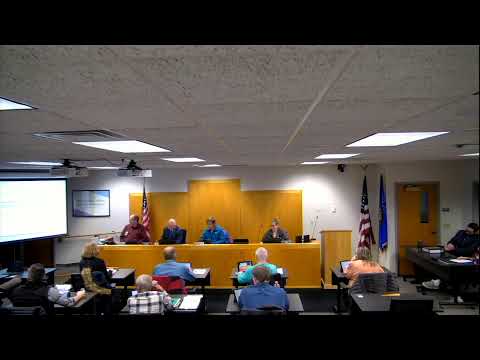
Chippewa County highway staff told the county board Feb. 11 that the Highway M bridge over the Chippewa River is the county’s most structurally deficient crossing and that replacement design work is moving ahead to enable grant applications.
Brian Kelly, Chippewa County Highway Commissioner, said the bridge — about 798 feet long and roughly 75 years old — has a sufficiency rating of about 12.2 out of 100 and has been posted at a 20‑ton weight limit after gusset plate buckling and other deterioration. “It’s our biggest bridge in Chippewa County, on the county system,” Kelly said. He noted that a sudden closure would force a long detour and that the 20‑ton posting effectively restricts most heavy commercial and agricultural loads.
County engineers have been retained to complete 30% design plans to make the county more competitive for funding and to produce better cost estimates. Kelly said an early construction estimate was about $15 million but that more detailed 30% plans are needed; the county has budgeted roughly $418,000 moved from savings on another bridge project to cover design and interim needs.
Kelly outlined the county’s current funding strategy: apply to the state local bridge program (the county expects a $6 million cap per the program rules), seek federal discretionary funds (a $4 million CDS ask was in committee at the time of the meeting) and pursue other grants. If state local bridge money and the $4 million CDS were both secured, Kelly estimated the county share could be roughly $5 million; with additional sources the local share could fall to about $3 million.
Board members pressed on safety, school bus crossings and enforcement. Supervisor Kelly (first name not recorded in the transcript) asked how catastrophic scenarios — for example, a failure while a school bus is on the bridge — are addressed; Kelly (the highway commissioner) said current state‑mandated postings incorporate safety margins and the county will continue monitoring and restricting loads as necessary. The county is also working with a strain‑gauge vendor and plans additional security camera monitoring after vandalism removed earlier sensors.
Engineering, final design and construction are planned in multi‑year steps; Kelly said 30% design will be completed this year, with final design and potential construction in later years depending on grant awards.
Ending: County staff said they will continue to monitor the structure, pursue state and federal bridge funding and report back to the board as design work and grant decisions progress.