Get Full Government Meeting Transcripts, Videos, & Alerts Forever!
Get email alerts on the Public Safety Animals topic
No spam. Unsubscribe anytime.
Fond du Lac council reviews tougher dangerous-dog rules, park code changes after neighborhood concerns
Summary
Council heard public comment and initial staff proposals on amending city code to strengthen dangerous-dog designations, add battery as a municipal violation in parks, set park closing hours, and restrict digging and metal-detecting in sensitive areas; staff warned of limited impound capacity and said more drafting is needed.
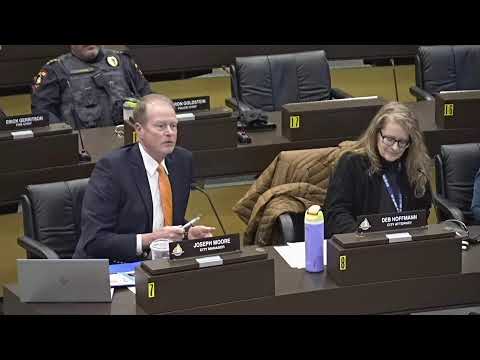
Council members and staff discussed proposed amendments to multiple chapters of the City Code on Feb. 12, focusing on provisions to strengthen dangerous-dog designations and clarify park rules after a neighborhood complaint prompted input. Jim Thomas, a resident who identified himself during public comment as a victim in a recent dog attack, told the council he supported provisions that would make a dangerous-dog designation “continue with the dog” if the owner moves and called for mandatory insurance or a surety bond for owners of designated dogs.
The proposed revisions, presented by City Attorney Hoffman, would also add battery as an offense that can be handled by municipal citation in some cases, create 11 p.m. closing hours for Lakeside Park and Lakeside West (with marina access exempted), require permits for digging or metal-detecting in parks to protect burial mounds and capped contamination sites, and adopt a state-authorized bite-quarantine program. Hoffman said the changes draw on model municipal drafting and state statute to align city practice with state law and to clarify enforcement authority.
Why it matters: Council members said the packet responds to resident safety concerns and a pattern of dog-bite reports. Hoffman noted the city has already been operating a quarantine program consistent with state law but wants formal authorization in the municipal code. Such ordinance changes affect enforcement options, the ability to impound or restrict animals, and public access rules in city parks.
Discussion and detail: Thomas praised several proposed provisions: continuation of a dog’s designation if the owner moves, an insurance or surety-bond requirement to force disclosure to insurers, and stronger fine and imprisonment options. He also urged clearer police-reporting procedures so victims can add information later and to publicize limited weekend veterinary options for severe animal injuries. City Attorney Hoffman said the draft would permit municipal civil citations in some battery cases that do not proceed through the district attorney’s office and explained the metal-detecting permit is intended to prevent disturbance of burial mounds and capped toxic sites in parks.
Councilmember Schisler asked that the dangerous-dog language be separated from the larger packet and considered on its own to allow more detailed review. Councilmember Mullen asked for a mechanism by which a judge could find a dog “vicious” if it killed a neighbor’s pet; staff said they would research options but flagged an ongoing regional shortage of secure animal-holding capacity. Councilmember Heisler and others emphasized the need to balance event-specific alcohol exceptions and youth athletic events when the code addresses alcohol in parks.
What’s unresolved: No ordinance was adopted; the item was presented as an input packet and will return at a later meeting in ordinance form. Staff signaled they will incorporate council feedback (impoundment provisions, judge options, and clearer definitions) and that some suggestions—such as adding impound capacity—may require coordination with regional partners.
Ending: The council did not take a vote on the ordinance changes on Feb. 12. Staff indicated the draft will be updated with council edits and brought back for formal consideration at a subsequent meeting.