Get Full Government Meeting Transcripts, Videos, & Alerts Forever!
Get email alerts on the Judicial topic
No spam. Unsubscribe anytime.
Tennessee justices probe whether probation-revocation appeal is moot after sentence expired
Summary
At oral argument, the Tennessee Supreme Court heard competing views over whether Janessa Sokolowski’s appeal of a probation revocation should be dismissed as moot because her supervised sentence expired, or whether collateral consequences and allegedly invalid court orders keep the case live.
The Tennessee Supreme Court on Monday heard arguments over whether an appeal by Janessa Sokolowski challenging a probation revocation should be dismissed as moot after her supervised sentence expired.
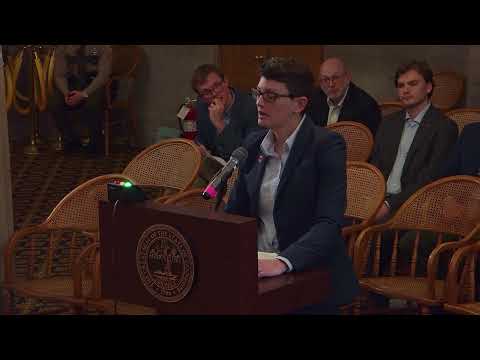
Ms. Windartner, counsel for appellant Janessa Sokolowski, told the court, “This appeal should not be dismissed on grounds of mootness,” arguing that the appellant’s challenge concerns the validity of trial-court orders and not the length of confinement. She urged that the court could grant effectual relief by vacating invalid warrants and revocation orders that she says were entered in violation of due process and on insufficient evidence.
The state disagreed. Jenna Adamson, representing the State of Tennessee, told the court that because Sokolowski’s sentence has expired, “her appeal has too,” and that a probation revocation is part of the original sentence such that the expiration renders direct appellate review ineffective. Adamson relied on federal and out‑of‑state decisions applying the Spencer line of authority and urged the court to limit the collateral‑consequences exception to clear, non‑speculative harms.
Why the issue matters: the justices’ decision could clarify how Tennessee treats mootness in probation‑revocation appeals and whether the collateral‑consequences exception applies when a revocation remains on a criminal record even after the term of supervision ends. Appellant counsel said that vacating invalid warrants would remove ongoing legal injuries — including effects on expungement eligibility and use of revocations in future proceedings — while the state argued that most of those harms are speculative and that the only practical remedy would be a remand for a new revocation hearing, which would not provide effectual relief if the sentence already was served.
Arguments and legal points raised
Windartner said the appeal rests on challenges distinct from sentence length: (1) a motion to dismiss the initial probation violation warrants, and (2) a sufficiency‑of‑evidence challenge to the finding of a probation violation. She told the court that vacating the original warrant would undercut subsequent warrants and revocations and that the presence of one or more invalid revocation orders on Sokolowski’s record is a present legal injury.
Windartner also pointed to the collateral consequences exception and cited Tennessee precedent she said supports review despite expiration of confinement. She told the justices that the invalid orders currently “exist on her criminal record” and could affect future sentencing, prosecutorial decisions and the timeline for eligibility to apply for expungement, which counsel said requires waiting periods measured from completion of sentence and any probationary period.
Adamson responded that a revocation proceeding is part of the penalty and therefore analogous to an attack on a sentence: when the sentence expires, appellate relief often becomes impossible to fashion. She argued that the typical remedy in similar cases is remand for a new revocation hearing and that, because Sokolowski already served the period at issue, remand would not provide meaningful relief. The state urged the court to follow decisions that require collateral consequences to be concrete and not merely conjectural to defeat mootness.
Questions from the bench
Chief Justice Kirby repeatedly pressed counsel to identify the specific relief that would remedy the alleged injury and to clarify the nature of the injury — whether it is a present, legal wrong or only prospective collateral effects. He asked Windartner to “specify exactly what relief you maintain is available that would remedy the injury and then be precise about what the injury is as well.”
Justice Campbell and other members queried whether the collateral consequences alleged — for example, potential future use of the revocation in later proceedings or timing for expungement eligibility — are sufficiently likely and concrete to justify keeping the appeal alive. The justices also asked whether Sokolowski could pursue separate civil remedies and whether Tennessee’s standing and mootness doctrines, as articulated in cases like Wilmington Trust and Norma Faye Pyles, require a different analysis than federal Article III authorities such as Spencer.
On both sides, counsel acknowledged tensions among precedents. Windartner urged that Rogers, Hartwell and other Tennessee opinions support a flexible, case‑by‑case approach that would allow review here; Adamson urged narrowing the exception and distinguishing revocation appeals from ordinary direct appeals of convictions or sentences.
Outcome
After roughly an hour of argument and rebuttal, the court took the case under submission. The justices did not announce a decision at the argument. The court clerk said, “The case will be submitted,” ending oral argument.
What remains unresolved
The justices will decide whether to treat probation revocation appeals as automatically moot after a sentence expires, to apply Tennessee’s collateral‑consequences exception more broadly, or to adopt a narrower, Spencer‑style approach that limits review to cases with concrete, demonstrable collateral harms. The ruling could affect defendants who allege due process errors in revocation proceedings when the administrative timeline of appeals outlasts the supervised period.