Get Full Government Meeting Transcripts, Videos, & Alerts Forever!
Get email alerts on the Medical Malpractice Notice topic
No spam. Unsubscribe anytime.
Tennessee Supreme Court hears dispute over who must be named in medical-malpractice pre-suit notices
Summary
The court heard arguments over whether a grandmother who obtained custody and signed medical releases could satisfy Tennessee—ode pre-suit notice requirements in a wrongful-death claim brought on behalf of two minor children.
The Tennessee Supreme Court heard arguments Tuesday in a medical-malpractice appeal about whether a grandmother who obtained custody and signed a HIPAA authorization satisfied the state's pre-suit notice statute in a wrongful-death claim brought on behalf of two minor children.
The dispute centers on the phrase "name and address of the claimant authorizing the notice" in the state's health-care liability notice statute (cited at argument as Tenn. Code Ann. § 29-26-121) and whether the grandmother, who filed the pre-suit notice and custody order after the children's mother died, qualified as the "claimant" or as an authorized agent for the children.
The case began as a wrongful-death claim after a 32-year-old woman sought hospital care for chest pain, was sent home, later required an ambulance and died. Attorneys for the plaintiffs told justices the only adult available to sign on the children's behalf was the grandmother, who had custody and signed medical-release paperwork; defense lawyers said the notice failed to identify the actual claimants under the wrongful-death statute and therefore did not comply with the pre-suit notice requirement.
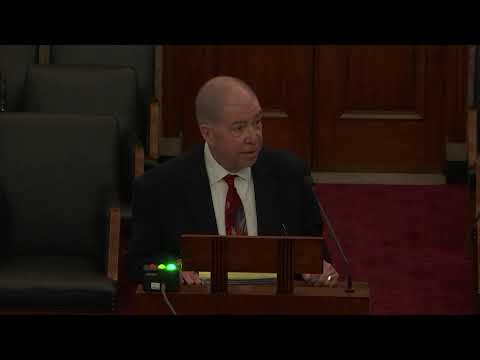
Plaintiff's counsel Timothy Holton told the court the pre-suit notice statute requires only that the notice identify the person giving the authorization and that the grandmother's custody and role in obtaining medical records made her the appropriate authorizer. "The only person that these children had left was their grandmother," Holton said, arguing she was the person who could authorize notice and obtain records on their behalf.
Defense counsel Rachel Hurt responded that the wrongful-death claim belongs to the decedent's heirs and that the statute and related case law require identifying the party who will pursue the claim. Hurt told the court, "Unequivocally, it is the minor children in this case" who are the claimants for purposes of a wrongful-death action and argued that the juvenile custody order did not give the grandmother authority to file or to settle on behalf of the children.
The justices questioned both sides about statutory text and precedent. Several justices noted differences in the statute's wording between provisions that use the term "claimant" for notice and "party" for later pleadings, and asked whether that distinction should affect interpretation. Counsel discussed appellate decisions the parties cited, including Williams v. Smyrna Residential, Martin, Stevens and IGU v. Vanderbilt, and a defense argument invoking the later-enacted damages "cap" decisions as relevant to prejudice from an inadequate notice.
The defense argued that the absence of the minors' names on the notice prejudiced defendants by obscuring potential damages and settlement exposure; Hurt said defendants typically take weeks to obtain records and evaluate claims and that knowing who the claimant is affects assessment and settlement strategy. Holton responded that the statute's listed elements do not require damages detail, and that defendants can pursue additional information after receiving notice.
Justices also explored standing and whether the grandmother's custodial order conferred authority to act as a next friend or authorized agent under Rule 17 and the statute. Defense counsel told the court the juvenile custody order limited medical decisions and did not expressly authorize control of funds, settlement, or litigation on behalf of the children, giving rise to a standing challenge; plaintiff's counsel said the complaint was styled "next friend" and that Rule 17 and the realities of minors' incapacity support allowing the grandmother's notice.
No ruling was issued from the bench. After argument, the court announced the case would be submitted for decision.
The appeal frames a broader question about how strictly Tennessee courts will require identification of the eventual litigant in pre-suit notice letters in health-care liability cases when the potential plaintiffs are minors or otherwise unable to execute authorizations.
Votes at a glance: none — this was an oral argument; the court took the case under submission.