Get Full Government Meeting Transcripts, Videos, & Alerts Forever!
Get email alerts on the Land Use Zoning topic
No spam. Unsubscribe anytime.
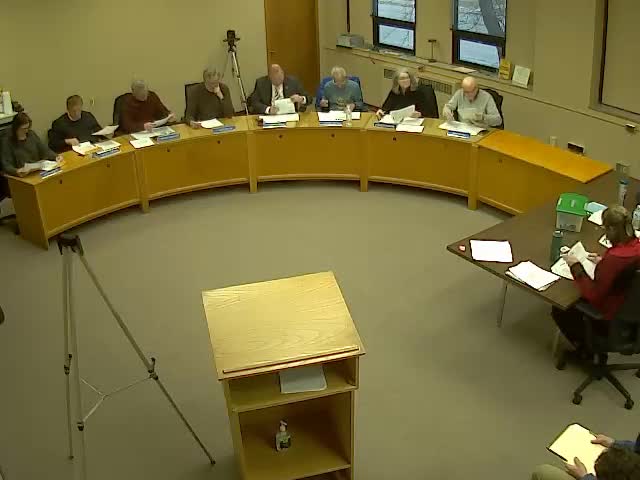
Planning commission approves conditional-use permit for vehicle facility at 631520 Third Avenue with amended conditions
Summary
The Kenosha City Planning Commission approved a conditional-use permit for a vehicle facility at 631520 Third Avenue, amending staff-recommended conditions to waive two items, reduce a required setback from 20 to 15 feet and permit a mountable curb in place of a landscaped buffer.
The Kenosha City Planning Commission voted Thursday to approve a conditional-use permit for a vehicle facility at 631520 Third Avenue and established amended conditions of approval that waive two named requirements, reduce a setback and permit a mountable curb in place of part of the previously required landscaping.
The amendment matters because it changes the development requirements the applicant must meet before the facility can operate under the conditional use, limiting some landscaping requirements while retaining other site controls and requiring a final public hearing after a Class 2 notice, as staff recommended.
At the commission’s initial public-hearing stage, a resident who identified himself as Charlie Suede of 631520 Third Avenue told commissioners he had met with staff members Rich Schroeder and Bridal Wilkie and said, “I think we're on the same page now. So I'm good with what they recommended.”
A staff presenter summarized the recommended changes and the commission’s options. The presenter said staff would recommend that “items c and f would be waived by the planning commission,” that setback requirement “g” could be reduced and that staff would accept reducing it to 15 feet, and that, in lieu of a planted landscape strip, the commission could allow a “mountable curb” (a low curb or wheel stop designed to be driven over occasionally) to keep vehicles on site. The presenter also said the proposed on-site parking would serve employees, customers and tenants and that vehicles for sale would be stored inside the building rather than displayed in the lot.
Commission discussion touched on vehicle turnaround and the existing curb cut. One commissioner said photos showed there was sufficient space near the garage for vehicles to turn around, and a different commissioner noted that an old curb cut now extends the driveway width from building to building; that observation informed commissioners’ willingness to relax the front-yard landscaping requirement.
The commission voted to amend the staff conditions (waive items c and f; change setback g from 20 to 15 feet; and allow a mountable curb in place of the landscaped buffer), then moved to establish the conditions of approval as amended. A roll-call vote recorded ayes by the commissioners who participated: Alderson Jan Maheuski (aye), Alderson Dominic Ruffalo (aye), Alderson Raquel Macchia (aye), Commissioner Chris Benninger (aye), Commissioner Michael Foster (aye), Commissioner Vincent Ruffalo (aye), Commissioner Lydia Swatswood (aye). The motion carried and the commission directed staff to schedule the required public hearing after publication of the Class 2 notice, per the staff recommendation.
Staff repeatedly distinguished among items that the commission could waive, items that were public-works-related, and items that were ordinance-required; the approved amendment removed particular staff-specified requirements while retaining others. The action does not itself authorize building permits; it establishes the commission’s conditions and moves the matter to the noticed public-hearing stage required by the city’s procedures.
No written statute, ordinance citation or specific development code section was read into the public record during the discussion; staff framed the change as an exercise of the commission’s discretion over conditions of approval for a conditional-use permit.