Get Full Government Meeting Transcripts, Videos, & Alerts Forever!
Get email alerts on the Mentorship Outreach topic
No spam. Unsubscribe anytime.
Council explores volunteer mentorship, safe-passage and a paid street-worker model for after-school hotspots
Summary
The advisory council discussed school-route safety, mentorship pilots, volunteer and paid models for street outreach, training needs, and plans to form a subcommittee to design a spring pilot focusing on Kennedy Plaza and high-school dismissal hotspots.
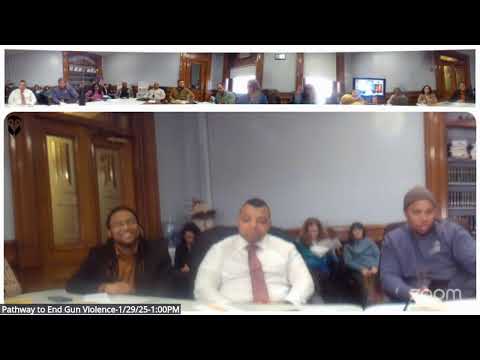
Providence — The Pathways and Gun Violence Advisory Council debated models for mentoring and outreach to reduce youth violence at school dismissal and transit hubs, with members weighing volunteer-based approaches against paid street-worker programs.
Council members discussed models ranging from volunteer ‘guardian angel’-style patrols to community-based, paid street workers coordinated through an established nonprofit. Lisa, representing the Nonviolence Institute, said the institute can provide training, scheduling and coordination for outreach staff and volunteers and urged caution about asking volunteers to physically intervene: “we don't recommend anyone jumping into a fight,” she said, adding that outreach workers focus on relationship-building and de-escalation and that the appropriate safety step for a violent incident is to call 911 when necessary.
Speakers emphasized that volunteers alone are unlikely to be sustainable without funding or stipends, and several members urged including law enforcement, school staff and rec-center personnel in planning to reduce friction.
Participants identified Kennedy Plaza and Central High School dismissal as recurring hotspots in prior operations and suggested a dual strategy: (1) build relationships in schools and neighborhoods before students arrive at transportation hubs, and (2) pilot on-the-ground outreach after school for a short season. Members suggested recruiting more women volunteers, using social media monitoring to identify locations, and deploying outreach through an existing banner such as the Nonviolence Institute to leverage trust and preexisting agreements.
The council directed staff to work with the clerks’ office on subcommittee logistics and open-meetings compliance, and several members volunteered to develop a rough timeline and recruitment plan to have a pilot ready by spring. Suggested next steps included a subcommittee to draft volunteer application materials and vetting protocols, a budget estimate for stipends and training, and outreach to schools and RIPTA to coordinate dismissal times and routes.
No final policy or funding decision was made. The council agreed to reconvene a smaller working group to produce a pilot framework and present it at the committee’s next full meeting on Feb. 26.