Get Full Government Meeting Transcripts, Videos, & Alerts Forever!
Get email alerts on the Streetlighting topic
No spam. Unsubscribe anytime.
City plans near‑term fixes, decorative pedestrian lights for dark stretches of North Main Street
Summary
City project staff reported plans to fill lighting gaps along North Main Street within weeks and to order decorative pedestrian fixtures for University Marketplace with a 16–20 week lead time. Commissioners asked that planned spacings and intersection approaches be shared before final installation.
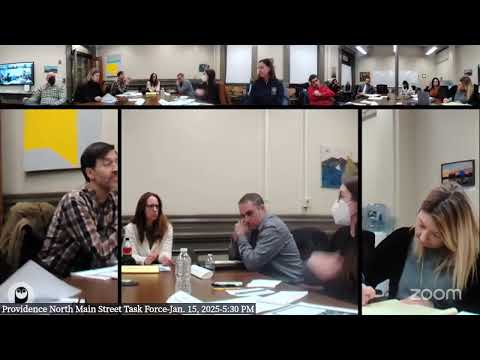
At the Jan. 15 meeting of the North Main Street Tax Commission, city project manager Kyle updated commissioners on an ongoing corridor lighting project intended to address multiple ‘‘gaps’’ in illumination along North Main Street and adjacent side streets.
Kyle told the commission the city has used GIS mapping to identify short‑term opportunities where fixtures can be powered from existing pole infrastructure and said crews plan to mobilize “within the next 1 to 2 months” to install lights in several gaps. He said the city is also procuring decorative, low‑level pedestrian fixtures for the University Marketplace area and expects an order lead time of “about 16 and 20 weeks.”
The project manager said crews are prioritizing locations where electrical infrastructure is already available to reduce installation time and cost. He described a near‑term focus on the stretch he called the “southbound direction on the North Bay Area ground” (as presented to the commission), and added the city and its vendor will continue GIS work to refine spacing and final placements.
Commissioners raised the importance of addressing intersections and marked crossings, not only mid‑block gaps. One commissioner asked specifically whether problem intersections such as the Smithfield Avenue crossing would be included in the plan; staff said those locations are being reviewed and that the consultants will return with maps for commission feedback before finalizing placements. Kyle said the lighting contractor and the city’s public‑property team are coordinating technical details such as glare, spacing, and wildlife impacts where medians or trees are present.
The update referenced the city’s Vision Zero concerns and federal guidance on roadway lighting practices; Kyle said the contractor will apply appropriate spacing and glare control standards as part of its design work. Commissioners asked to see the project team’s spacing plan and GIS outputs at a future meeting so they can offer site‑specific input prior to orders being placed.
At the meeting staff also thanked council leadership for help securing funding; staff did not specify the complete funding breakdown during the presentation. No formal ordinance or funding vote was taken at this meeting.
Short‑term schedule details provided in the presentation: mobilization to start within roughly 1–2 months for several gaps; decorative fixture delivery estimated at about 16–20 weeks after order, with installations anticipated in late spring or early summer depending on delivery and contractor schedules.
Commissioners indicated broad support for accelerating work in higher‑risk crossings but asked staff to return with plan maps and intersection treatments before installations were finalized.