Get Full Government Meeting Transcripts, Videos, & Alerts Forever!
Get email alerts on the Red River Road Bridge topic
No spam. Unsubscribe anytime.
Officials say Red River Road Bridge structurally unsafe; KYTC outlines funding and design options
Summary
Kentucky Transportation officials told the Clark County Fiscal Court that Red River Road Bridge, owned by CSX Railroad, has deteriorated to the point of being unsafe for most vehicles. The Transportation Cabinet advised the county on program rules, design requirements and next steps, and residents urged faster action to restore access.
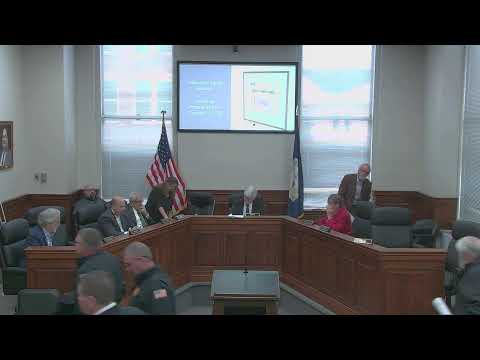
County residents and Kentucky Transportation Cabinet (KYTC) officials told the Clark County Fiscal Court that the Red River Road Bridge has deteriorated to the point that it cannot safely carry many modern passenger vehicles and must remain closed until replacement is designed and funded.
Why it matters: The Red River Road Bridge closure severs a local route used by residents and emergency services, and the structure is railroad-owned (CSX), which complicates funding and replacement timelines. KYTC officials said the county can apply for state bridge funds only after ownership or a documented project plan and that design work should meet KYTC standards.
Public comments opened the discussion. Resident Joy Curtis described anxiety and safety concerns when using alternate access and said mail and emergency access had been disrupted since the bridge closure. Curtis asked for an update and what the county planned to do.
Daniel Kucella, branch manager for engineering support at KYTC District 7, and Corey Jones, the district bridge engineer, attended and described inspection findings and program requirements. Kucella said KYTC inspects the structure annually because it carries a public roadway even though CSX owns the bridge. He told the court that recent inspections showed significant steel deterioration, including disintegrating rivet heads that remove connections between beam elements. In his assessment the county cannot safely open the bridge to typical passenger vehicles: "based on the load rating calculations anything less than 3 tons will close," the engineer said.
KYTC advised the court on options and constraints: - The County-City Bridge Improvement Program (KYTC) is a primary state funding source for replacement but requires submittal of structural plans and KYTC standards compliance. KYTC staff will review plans and recommend approved projects to Frankfort. - For the county’s application to be considered, the road superintendent listed on the application generally must hold KYTC Bridges 101 and 102 certifications; KYTC staff said that requirement is part of the program’s application rules. - CSX may be willing to provide design drawings; however, those documents may not meet Kentucky standards without review or modification. KYTC recommended hiring a consultant pre-approved with KYTC to develop plans that will be accepted by both KYTC and (potentially) CSX, which can shorten approval time.
Court members discussed next steps. Several magistrates urged the county to contract with a pre-approved engineering consultant and to prepare application plans now so the county can apply immediately if grant deadlines or funding windows open. One magistrate suggested using local LGA (local government allotment) funds to pay consulting and design costs while the ownership/transfer paperwork is resolved.
County officials reported prior attempts to coordinate with CSX; the county has previously sought bridge replacement funds but ran into delays because CSX retains ownership and maintenance obligations under a decades-old agreement. Several court members said they have engaged state legislators, and one said U.S. Senator Elkins has been briefed about the difficulty counties face with railroad-owned structures.
KYTC staff described typical design outcomes: replacement may be steel or concrete depending on span and budget; concrete is often preferred for longevity and easier inspection, but longer spans can favor steel superstructures. Abutments appear reusable in place, but final determination will come from design documents.
What the court asked staff to do: pursue a consultant pre-approved by KYTC to develop preliminary design plans; assemble multiple contractor cost estimates and include demolition costs in any application; confirm whether CSX will provide any design materials and whether those would be acceptable with KYTC review; and seek available state and federal bridge funding options.
Residents and court members emphasized urgency: speakers noted that the closure limits mail delivery and emergency access and asked officials to accelerate design and funding steps. KYTC committed to sending inspection reports and guidance to the court and to continue coordinating with the county while the ownership and funding steps progress.
Sources and attribution: Public comments by Joy Curtis; remarks and technical explanation by Daniel Kucella (KYTC District 7 branch manager) and Corey Jones (KYTC bridge engineer); recorded court discussion.