Get Full Government Meeting Transcripts, Videos, & Alerts Forever!
Get email alerts on the District Budget topic
No spam. Unsubscribe anytime.
Superintendent lays out budget priorities, warns of federal-grant uncertainty and rising insurance costs
Summary
Superintendent Dr. Robinson told the Shenendehowa Board the district is taking a “measured approach” to the 2024–25 budget, highlighting stable local priorities, potential shifts in federal funding (Title I and IDEA), a roughly $2.3 million special-education funding line, and rising health-insurance costs that could exceed prior projections.
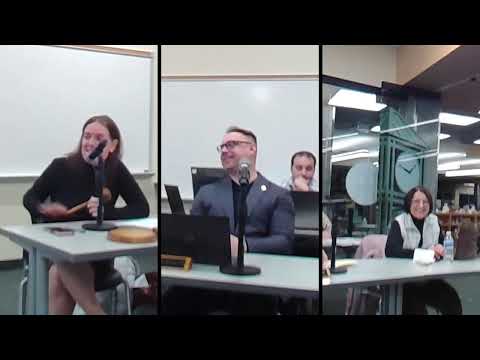
Superintendent Dr. Robinson told the Shenendehowa Central School District Board of Education on Feb. 4 that the district is beginning the 2024–25 budget process with a cautious, data-driven approach as uncertainty persists at the federal level.
“Measure twice and cut once,” Robinson said, summarizing the district’s approach to budget planning and underscoring the administration’s emphasis on repeatable, sustainable results.
Robinson explained the budget process in detail, saying the public-facing vote covers the general fund while the district manages multiple fund categories — school lunch, debt service, capital projects and special aid/grant funds — behind the scenes. He noted the district uses New York’s uniform accounting code system to analyze roughly 900 plus codes so leaders can “read the budget like a story.”
Why it matters: Robinson warned that while many federal education grants are established by Congress and are not subject to abrupt cancellation, there is public confusion and misinformation about what might change. He identified Title I and IDEA as examples of congressional grants that provide critical supports and emphasized that the loss or reduction of such funds would force the district to prioritize services and potentially cut or repurpose other items.
Key details and numbers discussed
- The district currently expects about $2,300,000 in special-education funds and roughly $700,000 across various Title grants; Robinson called those sums “critical” even if they are small relative to the overall budget.
- Health-insurance costs are a major pressure. Robinson noted prior annual increases of 6–8% have in recent years grown to the 10–15% range and said the district spends about $36 million on health insurance; even small percentage changes have large dollar effects.
- The school tax-cap formula (often called the “2% cap”) is a formula-driven tax growth factor rather than a flat 2% limit; Robinson reported the district’s tax growth factors have been roughly stable year-to-year (example figures discussed: 1.0093 last year, 1.094 this year).
- Staffing and collective bargaining: Robinson reminded the board that negotiations with employee groups SCA and CSEA are under way; he estimated those two groups together represent roughly 85% of the district’s employee population and thus have major budgetary impact.
- Retirement activity is below typical levels. Robinson said the district has unusually few retirement submissions this cycle, lowering opportunities to repurpose positions or realize turnover savings.
District priorities and process
Robinson said the budget process begins with equity and outcomes, focusing resources where needs are greatest and examining program effectiveness (where the district sees diminishing returns, it asks why). He described scenario analysis across multiple years, repurposing vacancies for new priorities, and leveraging grant opportunities where possible (he thanked staff including Matt and Vicky for recent grant work such as a learning-technology award that will support AI-related work and a teacher-collaboration grant with Siena).
On community and compliance issues
Robinson also flagged operational items that feed into the budget: cybersecurity, obsolescence of technology (device replacement cycles), electric-bus planning, and the upcoming kindergarten center construction, which will require multi-year budgeting once construction begins.
Board reaction and next steps
Board members asked logistical questions about advocacy and calendars for legislative outreach; Robinson said regional advocacy and BOCES-led opportunities are planned and confirmed that the administration will continue to brief the board as assumptions firm up. He said budget work will intensify during March and that the board will be more engaged as the process moves toward public hearings and the May vote.
Ending
Robinson closed by reiterating the district’s focus on preserving programs that produce results and preparing for contingencies while prioritizing equitable student outcomes.