Get Full Government Meeting Transcripts, Videos, & Alerts Forever!
Get email alerts on the Wildfire Preparedness topic
No spam. Unsubscribe anytime.
Council creates wildfire preparedness ad hoc, vows community outreach and resiliency planning
Summary
Council approved a comprehensive wildfire preparedness and safety program and appointed an ad hoc committee of Council members O'Hara, Tragero and Golder to help guide community engagement and coordination with other agencies.
The Santa Cruz City Council on Tuesday approved a motion to begin a comprehensive wildfire preparedness and safety program and to create a council ad hoc committee to help shape outreach and coordination.
Council member O'Hara, who brought the item forward with Council members Tragero and Golder, said that even after recent rains the city must keep wildfire preparedness top of mind. Fire Chief Rob Odey described wildfire as a year-round threat: "Wildfire season, as we have learned over the past couple of years, is not just a season, but it's year round," he said.
The administration's presentation included a risk-assessment overview from Office of Emergency Services manager Meredith Albert, who summarized hazard-assessment tools and said the city's immediate wildfire threat within city limits is lower than in some county areas but the community is surrounded by higher-risk zones. Albert emphasized cross-hazard benefits of preparedness work — for example, emergency alert registrations help during floods, tsunamis and fires — and urged more community signups for the CruiseAware emergency-notification system.
Fire Marshal/Division Chief Tim Shields described a wildfire resiliency plan developed after the CZU Lightning Complex fires that focuses on protecting critical infrastructure and wildland-urban interface areas. Shields said grant funding from CAL FIRE and a hired arborist-led contractor are supporting vegetation management planning with an anticipated project completion of July 1, at which point the city will return to council with a resiliency plan.
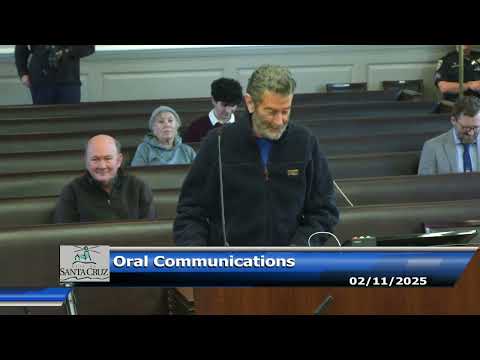
Public commenters supported neighborhood-level action and urged sustained effort and partnerships; one resident described organizing goat grazing to reduce fuel loads and urged the city to work with arborists and PG&E on hazardous-tree removal.
Council member O'Hara moved to adopt the staff recommendation and to appoint an ad hoc committee; the motion named herself, Council member Tragero and Council member Golder as the three ad hoc members. Council member Golder seconded the motion. The clerk recorded ayes from all members and the motion passed.
The council and staff described a proposed six-month community-engagement timeline for the program, coordinated with county efforts and Measure Q funding opportunities. Council members also raised insurance availability and affordability for homeowners as an area for future state-level advocacy.
The ad hoc committee will engage neighborhoods, Firewise groups and agency partners and report back to the council as the plan and stakeholder process develop.