Get Full Government Meeting Transcripts, Videos, & Alerts Forever!
Get email alerts on the Water Allocation Policy topic
No spam. Unsubscribe anytime.
Buena Vista trustees preview changes to water‑allocation policy as town adds new supply
Summary
At a Feb. 11 work session the Town of Buena Vista reviewed proposed updates to its water allocation policy to account for newly acquired water supplies and to encourage use toward attainable housing, economic development and multifamily projects; a public hearing will occur in March 2025.
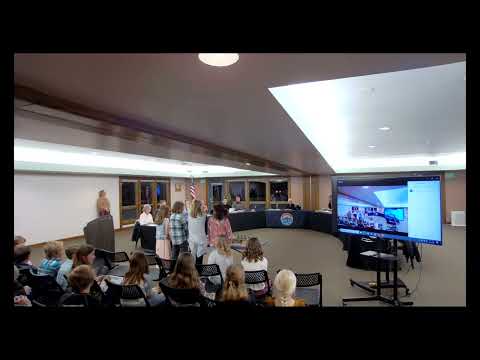
Town Manager Joel (first name used in staff presentations) and staff presented proposed updates to the Town of Buena Vista’s water allocation policy during a Feb. 11 work session, outlining how the town would distribute newly available water and suggesting policy language to direct water to housing and economic goals.
The town is proposing to include an additional roughly 20 acre‑feet recently budgeted for the community in the allocation schedule. Staff presented the policy framework in single‑family equivalents (SFEs), a planning metric that defines one SFE as roughly the demand from a 3/4‑inch tap. The packet shows about 372.9 SFEs available a year ago and staff said the town’s available SFEs are now close to 373. Staff said every 5 acre‑feet roughly equals 35 SFEs, and that adding the new supply would add about 140 SFEs to the portfolio.
Joel summarized the policy categories: infill (geographic boundary east of the highway), non‑infill single‑family, economic development (prioritizing year‑round jobs), public/nonprofit/government uses, multifamily rental (long‑term rental, not condominiums), affordable/attainable/workforce housing, an emergency category and general development for other projects. He said the emergency category currently shows 0 SFEs because the town expects future purchased water to cover emergency needs, but staff proposed adding narrative language to clarify that project water can be used for emergencies as necessary.
Staff proposed two policy mechanics to steer water toward town priorities. First, updated allocation quantities for each category reflect the new supply: staff proposed increases including 5 SFEs to infill, 15 to non‑infill, 20 to economic development, 20 to multifamily, 20 to attainable housing and 60 to general development. Second, staff presented draft language that would limit how much a major subdivision could draw from the general development bucket (maximum 80% from general development) and a similar cap for large multifamily projects (maximum 85% from general development). The proposed caps are intended to require developments drawing heavily from the general pool to secure additional water from other categories (for example, through deed restrictions, live/work units or other dedicated commitments).
Trustees asked how the limits could be adjusted in the future and whether the restrictions could be gamed by developers moving projects into infill categories. Joel and staff said category assignment would be decided through planning and zoning and final plat processes, with staff and planning recommendations subject to board approval, and acknowledged developers sometimes propose creative workarounds.
Trustees also discussed moving 20 SFEs from the multifamily rental category to the affordable/attainable workforce category; the shift was suggested to better align allocations with local housing needs. Staff said final dedication of water to a project occurs at final plat and public improvement agreements; the town holds allocated SFEs for a 10‑year period after final plat but charges an escalating maintenance fee if the developer does not build within that timeframe.
Joel said the town plans to publish the draft policy for public comment and to hold a public hearing in March 2025 as the formal next step in the process. No final vote on the policy occurred during the Feb. 11 work session; staff requested trustee feedback and confirmed further public engagement and a scheduled public hearing before the board would take action.
The work session also highlighted baseline findings from the town’s water conservation analysis: summer (April–October) outdoor watering drives peak demand; water loss/unaccounted‑for water accounted for roughly 21% of annual demand in 2023; single‑family residential taps represent a large share of connections and use; and precipitation strongly affects annual outdoor use. Staff and the Water Advisory Board will develop proposed conservation measures and implementation steps for a March follow‑up work session.
No formal policy change was approved at the Feb. 11 meeting; staff will publish the draft, proceed with scheduled public engagement in March, and bring the item back to trustees for possible adoption after the public comment period.