Get Full Government Meeting Transcripts, Videos, & Alerts Forever!
Get email alerts on the School Phones Electronic Devices topic
No spam. Unsubscribe anytime.
Policy committee holds proposed electronic‑devices ban after months of surveys and focus groups
Summary
After months of community forums, focus groups and surveys that drew strong but split input, the Wallingford‑Swarthmore School District policy committee asked administrators to revise the draft electronic‑devices policy and administrative regulation and return next month rather than move it to the full board.
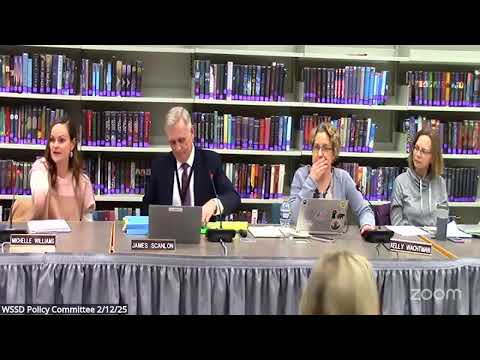
The Wallingford‑Swarthmore School District policy committee reviewed a substantially revised draft of Policy 2.37 and its accompanying administrative regulation on electronic devices on Feb. 1, and asked administration to make clarifying changes and return the policy to the committee rather than advance it to the full board this month.
Superintendent‑level presenter Dr. Scanlon said the district had pursued an extended public process — an October forum, multiple focus groups and January surveys — to shape the draft. “This has been a fascinating experience and a very, I think, a very engaging time to gather information and learn about a topic,” Dr. Scanlon said. He told the committee the surveys drew nearly 1,100 parent responses (about a third of families), roughly 76% of high school students and about 70% of middle school students, and roughly half of professional staff.
Committee members and school leaders described wide agreement that cellphones and other devices create classroom distractions, but they differed on how strict a policy should be at the high‑school level. Dr. Matsenka, the middle‑school principal, and Mr. Benzing, the high‑school principal, told the committee they have already tightened building practices this year (locking phones away or using pouches in many classrooms) and reported fewer disruptions than in previous years.
Committee members asked administrators to revise the draft before a first public board reading. Specific revisions requested included clearer definitions (for example, clarify “instructional time” versus “non‑instructional time”), firmer language about middle‑school storage (lockers versus classroom pouches), and an explicit decision point for the high school about whether lunch and passing time remain permitted phone windows. Several members urged clearer, consistent language about enforcement and about how special considerations (medical devices, IEP/504 accommodations) will be documented.
The draft policy would require phones and smartwatches to be “off and away” during class and sets out different guidance by level: elementary, middle and high school. The regulation proposes progressive discipline at the high school (verbal warnings, then written minor incident documentation, parent contact and escalating discipline for repeated violations) and a restorative‑practice option — referral to the student assistance team or counseling for frequent violators. The draft also specifies that smartwatches and other devices would be treated like phones if used to call, text or access social media during restricted periods.
Public commenters at the committee meeting urged the committee to adopt a stricter “bell‑to‑bell” ban at all levels or at least at the high school. Tom Melvin, speaking for the group Haven Hold the Phone, told the committee the district should be “bold,” citing research the speakers said links classroom phone use to poorer attention and discipline outcomes. Other residents, including parents of high‑school students, also urged stronger limits to restore socialization time and reduce distractions.
Several committee members and some parents said they also support an educational program about screen time and digital responsibility; the draft regulation calls for classroom modules, materials for parents and assemblies on the effects of excessive device use.
The committee did not vote to send the policy to the full board for first reading. Instead, members asked administrators to incorporate the feedback — clarifying definitions, tightening middle‑school language about storage, and deciding whether to change the high‑school approach on lunch and passing time — and return a revised draft at the next policy committee meeting. Dr. Scanlon told the committee the administration recommends implementing a final policy in the 2025–26 school year and will continue working with principals and staff on operational details.
The discussion underscored divisions among parents, staff and students: staff and many teachers favor stricter restrictions, while parent and student survey results and public comment showed sizable support for a balanced approach that preserves limited access in specific situations. Committee members said enforcement consistency and clear communication to parents and students were priorities before any board reading.