Get Full Government Meeting Transcripts, Videos, & Alerts Forever!
Get email alerts on the Nuisance Blight Redevelopment topic
No spam. Unsubscribe anytime.
Sunbury work session walks through nuisance, blight and redevelopment authority process
Summary
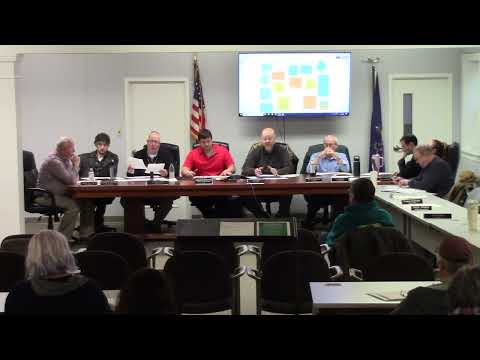
SUNBURY — At a Sunbury City work session on Oct. 12, city staff, members of the redevelopment authority and legal counsel outlined how properties are added to the city's nuisance and blight lists, how the point-based nuisance system adopted in March 2023 works in practice, and what steps follow if a property is certified as blighted.
SUNBURY — At a Sunbury City work session on Oct. 12, city staff, members of the redevelopment authority and legal counsel outlined how properties are added to the city's nuisance and blight lists, how the point-based nuisance system adopted in March 2023 works in practice, and what steps follow if a property is certified as blighted.
City staff and redevelopment authority representatives told the council that the city now uses a points-based nuisance/abatement ordinance that adds criminal incidents (for example, shootings) and property‑maintenance violations into a single point table. A redevelopment authority representative said the ordinance ties points to the property rather than to an individual: "it's tied to the property itself," and property owners therefore remain responsible even if the person who committed an offense is not prosecuted.
The work session aimed to clarify responsibilities among the code office, the blight-prevention review committee (BPRC), the planning commission and the redevelopment authority (RA). Staff described a multi-step process: code officers document violations and send reports (including police reports) to the code office; the property may be reviewed by BPRC and the planning commission; property owners receive notice and have 30 days to mitigate or enter a rehabilitation plan; and vacancies or certified blight properties can be referred to the RA for further action.
Why it matters: the discussion affects property owners, tenants, neighborhoods and the city's legal and financial exposure. Officials repeatedly emphasized limits and safeguards: council still votes to place properties on the public nuisance list, courts review eminent domain requests, and the city has not taken occupied structures through eminent domain in Sunbury's recent history.
How the point system and evidence work: staff said the ordinance assigns high points for violent incidents (the discussion referenced a 12‑point score for shootings) and lower points for maintenance items (property‑maintenance violations were described as worth 3 points each in the ordinance's table). Police reports are provided to the code office so staff can document incidents and compute points. Officials emphasized that adding a property to the list does not require a criminal conviction; by ordinance and by precedent cited in the session, the city treats the condition as tied to the property and the hazard or community impact, not to the criminal status of any particular occupant.
Next steps after listing: if committees determine a property rises to the statutory blight criteria, the owner receives notice and has opportunities to appeal and to work with code staff. If remediation fails and a vacant property is identified for redevelopment, the RA may pursue further mitigation, acquisition, eminent domain or sale. Staff described coordination with tax claims and two phases of tax sale; a judicial sale can clear liens and make title transfer simpler for redevelopment. Officials estimated a typical "plain vanilla" property path can take roughly a year to 18 months, while tax‑claim timelines and larger redevelopment efforts can span multiple years.
Finances, staffing and tools: speakers said the RA operates primarily from a self‑sustaining account that receives proceeds from property sales; the authority does not receive operating funds from the city general fund. The largest ongoing RA expense is legal costs associated with eminent domain and court processes. City staff said the RA holds at least two properties (one still in the eminent-domain stage), and the RA-named insurance currently applies to the former police station under the city's policy. Staff and RA representatives noted the RA has used federal Community Development Block Grant funding for some acquisitions in the past but found CDBG funds carry programmatic restrictions.
Occupied properties and social services: officials stressed that occupied structures raise additional legal and human-services issues. Staff said the city historically has avoided taking occupied properties by eminent domain and instead tries to pair code enforcement with social‑service referrals, caseworkers and rehabilitation plans. Officials described frequent coordination with tax claims, courts, third‑party contractors for cleanouts, and social‑service providers when family, mental health or housing instability is part of a property's condition.
Examples and lessons: the session reviewed a recent RA project on Washington Avenue that used a modular home; staff said that project produced a community benefit but that the RA posted a net loss on that development (staff cited a loss in the tens of thousands of dollars). The RA representative said the authority generally sells acquired properties "as-is" after necessary safety work and typically relies on private developers or buyers to complete full redevelopment.
Council direction and information requests: several council members asked for clearer, shared flowcharts and for code‑office and police reports to accompany future listings so elected officials can see the underlying evidence and timeline. Staff offered to circulate a flowchart and to coordinate cross‑agency communication to reduce confusion about which "list" or table is in play at each step.
No formal votes were taken during the work session; the meeting was informational and intended to align committees and staff on process and responsibilities.