Get Full Government Meeting Transcripts, Videos, & Alerts Forever!
Get email alerts on the Public Safety topic
No spam. Unsubscribe anytime.
Witnesses tell Senate Indian Affairs tribal public‑safety funding gap leaves communities vulnerable; jurisdiction fixes urged
Summary
Leaders told senators public safety and justice in Indian Country are vastly underfunded, with a reported $3 billion shortfall and 25,000 officer deficit; witnesses urged Congress to couple jurisdictional fixes with funding and to expand tribal courts' access to electronic evidence.
Witnesses at the Senate Committee on Indian Affairs oversight hearing described sizable funding and jurisdictional gaps that hamper tribal law enforcement, prosecutions and courts.
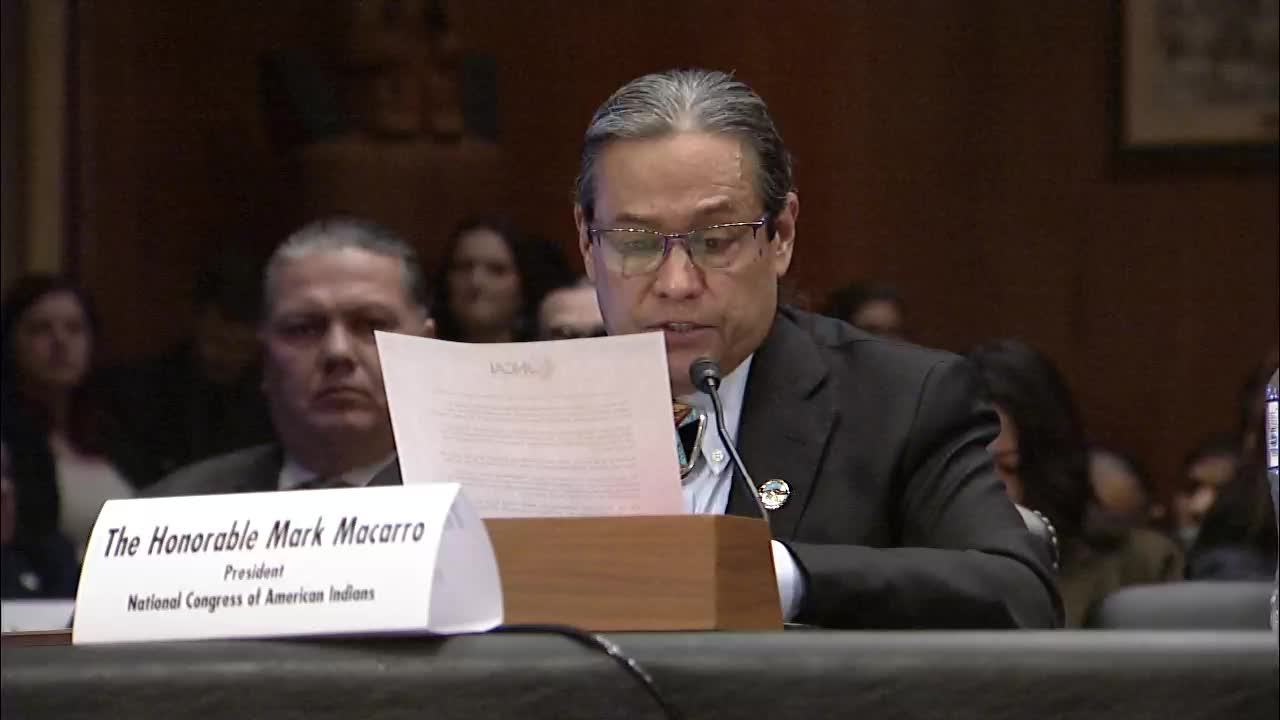
"Public safety and justice in Indian country is currently funded at only 12% of actual need," Mark Macarro, president of the National Congress of American Indians, told the committee, citing a Bureau of Indian Affairs Office of Justice Services 2021 report that estimated a $3,000,000,000 funding shortfall and the need for about 25,000 additional personnel to meet federal tribal policing standards.
Macarro and other witnesses raised jurisdictional barriers that limit tribes’ ability to fully police and prosecute crimes on tribal lands. Senator Tina Smith (referred to in the hearing as Senator Smith) and other senators discussed proposed expansions of tribal special criminal jurisdiction—legislative steps that would allow tribes to prosecute certain offenses by non‑Indians when specified conditions are met. Macarro said restoring more prosecutorial authority is a necessary step and warned that without funding to staff expanded jurisdiction, the benefit of new authority would be limited.
Senators and witnesses also called attention to tribal courts. Senator Catherine Cortez Masto highlighted an effort, the Tribal Access to Electronic Evidence Act, which would provide tribal courts access to electronic evidence used by other courts. "It would improve tremendously" public safety, Macarro said, describing the need for tribal courts and tribal law enforcement to access national databases (such as NCIC) and other investigative resources available to nontribal counterparts.
Other witnesses and senators discussed retention and recruitment challenges for BIA officers and for tribal police, and supported legislation such as the Badges Act to improve recruitment and retention. Panelists urged the Department of Justice and other federal agencies to create or strengthen institutionalized tribal desks and points of contact to make tribal legal matters less ad hoc and more structurally supported.
Ending: Witnesses urged Congress to pair jurisdictional reforms with predictable, sustained funding and to expand technical and evidentiary access for tribal courts and law enforcement to improve public safety on tribal lands.