Senate Indian Affairs hearing spotlights IHS funding shortfalls, maternal-child health and behavioral-health needs
Get AI-powered insights, summaries, and transcripts
SubscribeSummary
Witnesses told the Senate Committee on Indian Affairs that the Indian Health Service and tribal health programs remain chronically underfunded, citing an estimated $63 billion full‑funding figure for IHS and urgent gaps in maternal, infant and behavioral health services.
Leaders of tribal health and national Native organizations told the Senate Committee on Indian Affairs that chronic underfunding of the Indian Health Service (IHS) and workforce shortages endanger American Indian, Alaska Native and Native Hawaiian patients and communities.
The hearing opened with a call to uphold the federal trust and treaty responsibility to tribal nations, then turned to health priorities. "Reduction to an already short‑staffed healthcare provider does not honor the legal and political obligations made to tribal nations and puts lives at risk," Mark Macarro, president of the National Congress of American Indians, said in his prepared remarks.
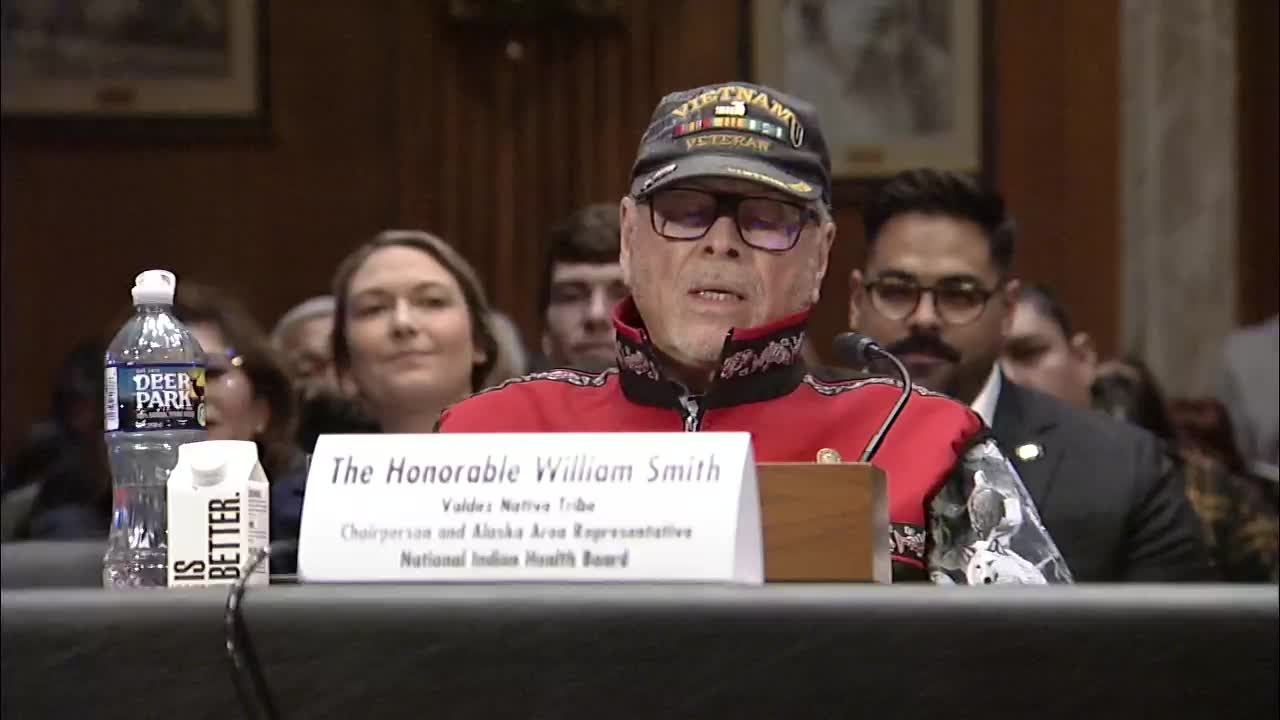
Chief William Smith, chairperson and Alaska area representative for the National Indian Health Board, told senators the Indian health system ‘‘continues to be dramatically underfunded’’ and urged Congress to provide full and mandatory funding for IHS. He cited the Indian Health Service National Tribal Budget Formulation Working Group’s estimate that full funding for 2026 would be $63,000,000,000. "Providing Indian Health Service with full and mandatory funding will ensure the federal government is meeting its trust and treaty responsibilities and obligations to the tribal nations for health," Smith said.
Witnesses emphasized several priorities: expand the behavioral‑health workforce and services, preserve tribal authority over culturally based treatment, strengthen maternal and infant health programs, and protect funding streams that tribal programs rely on.
On maternal and infant health, Smith highlighted high, disparate rates of pregnancy‑related deaths and infant mortality among American Indian and Alaska Native populations and urged investment in workforce development and targeted programs. He and other witnesses pointed to recent reports, including the Alice Spotted Bear Commission on Native Children, as sources of recommended reforms to early‑childhood and maternal care.
Behavioral health and substance misuse were described as an urgent need. Smith asked Congress to fund tribal behavioral health with flexible, self‑governance options and to support tribal traditional healing services. He urged using more than grant funding where appropriate, saying grant‑only models can create reporting barriers and limit long‑term access to care.
Witnesses also raised concerns about federal personnel guidance and its near‑term effects on health staffing. Macarro and others said recent Office of Personnel Management (OPM) communications created confusion among federal employees, including IHS providers, and warned that staffing reductions or freezes would compound already severe provider shortages in rural tribal areas.
The committee and witnesses highlighted HR 741, the Stronger Engagement for Indian Health Needs Act of 2025, as legislation they support to address staffing and engagement issues. No committee action or vote occurred during the hearing.
Ending: Witnesses urged Congress to convert partial or discretionary funding into stable, mandatory appropriations where statutes and precedent permit and to pair any jurisdictional or policy changes with commensurate funding and workforce investments to avoid leaving tribal health systems unable to deliver services.