Get Full Government Meeting Transcripts, Videos, & Alerts Forever!
Get email alerts on the Aging Research Funding topic
No spam. Unsubscribe anytime.
Witnesses Urge Congress to Boost Aging Research, Develop FDA Pathways and Expand Biomarker Trials
Summary
Scientists at a Senate hearing said aging biology research is at a turning point and urged increased NIH funding, clearer FDA regulatory guidance for aging-targeted therapies, and investment in biomarkers to speed trials and translation.
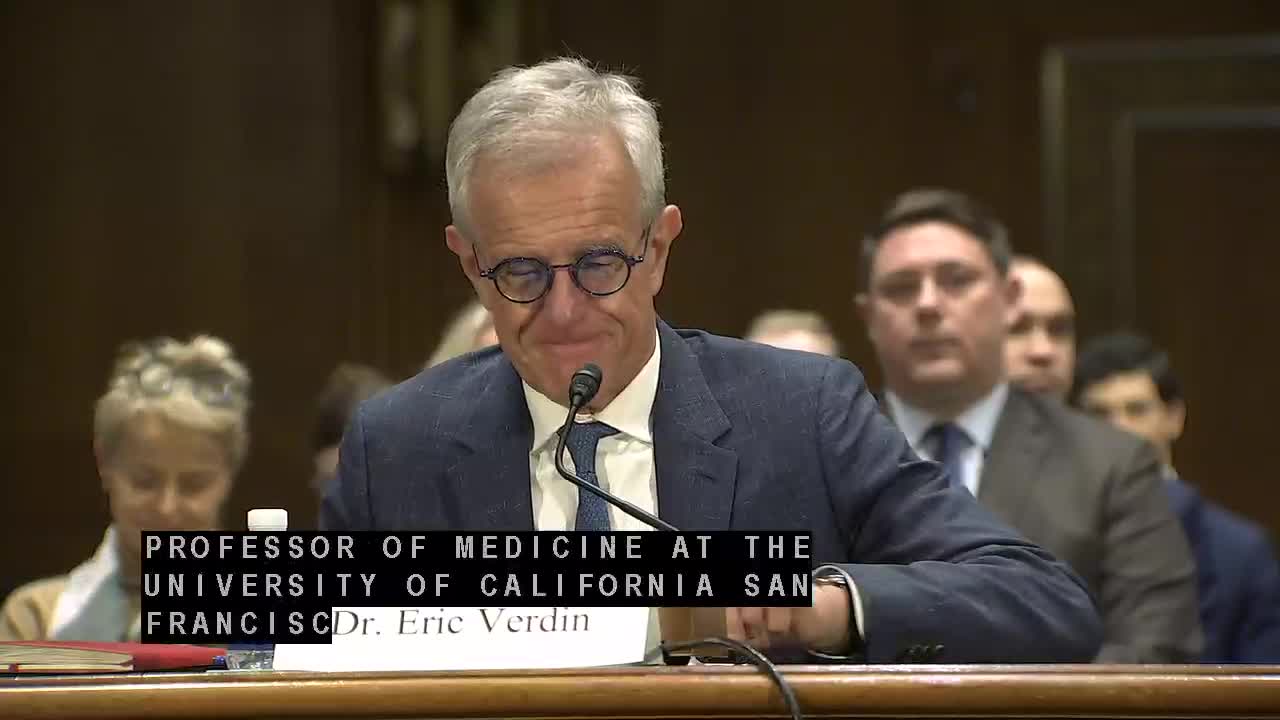
Dr. Eric Verdin, president and CEO of the Buck Institute for Research on Aging, told the Senate Special Committee on Aging that aging is ‘‘the greatest risk factor’’ for chronic diseases and that the field is at an inflection point. Verdin urged Congress to increase NIH funding for molecular aging research and to support work that translates laboratory findings into human applications.
‘‘The science is at a turning point,’’ Verdin said. He recommended development of validated biomarkers of aging that would allow researchers to test interventions in far shorter time frames than traditional long‑term outcome trials. Those markers, he said, would let researchers and regulators measure whether a drug, lifestyle intervention or other therapy alters biological aging within months to a few years rather than decades.
Verdin and other witnesses also flagged regulatory uncertainty as an obstacle: without clear Food and Drug Administration guidance on ‘‘aging-target’’ therapies, private investment and drug development are constrained. Verdin recommended a policy approach that pairs increased basic research funding with incentives and pathways to translate discoveries into clinical practice.
Why it matters: witnesses argued that even if one major disease were cured, population life expectancy would increase only modestly unless the aging process itself is addressed. They said a focus on aging biology could compress late‑life disease and reduce long‑term health-care costs.
Discussion points included: what metrics would qualify as reliable biomarkers of aging; funding levels and the effects of proposed NIH cuts; and the role of public‑private partnerships in moving therapies from animal models to humans.
Ending: Verdin told senators that a sustained federal research commitment and clearer regulatory pathways could help shift the nation’s approach from treating late-life disease toward preventing it by targeting aging mechanisms.