Get Full Government Meeting Transcripts, Videos, & Alerts Forever!
Get email alerts on the Health Care System Operations topic
No spam. Unsubscribe anytime.
Cherokee Nation Health Services reports record ER visits, readies new hospital and service expansions
Summary
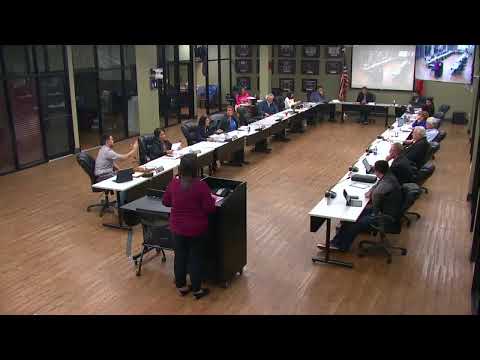
At a Cherokee Nation council meeting, Dr. Jones reported a record 5,245 emergency-department visits in December, high prescription volumes and ongoing planning for a phased move into a new hospital. Staffing, supply-chain risks and construction transitions were highlighted as operational priorities.
Dr. Jones, Cherokee Nation Health Services director, told the Cherokee Nation council that the health system recorded 5,245 emergency-department visits in December and expects January to exceed that figure amid a strong influenza season.
The report, delivered during the council’s meeting packet review, said the system filled roughly 209,000 prescriptions in the period and kept third-party revenues stable despite changes in Medicaid eligibility. “Third-party revenues holding steady despite the fact that we’ve had a decrease in the eligibility in some of things like Medicaid,” Dr. Jones said during the presentation.
The system is planning a phased transition into a new hospital expected to begin in just over a year. Dr. Jones said teams are already preparing staff training, fire-safety walkthroughs and staged patient transfers. “It’s a very complicated and massive undertaking for the hospital… we can't just shut our doors at Hastings 1 day and open them over in the new hospital the next,” he said.
Why it matters: higher emergency volumes and construction-related transitions influence patient flow, staffing needs and short-term budgets. Officials described operational steps to avoid service interruptions as facilities, equipment and staff move to new buildings.
Key details from the report: - Emergency and urgent-care pressure: December ED visits hit 5,245; the health system attributed the surge to flu season and expected January to be higher. - Pharmacy volumes: about 209,000 pharmacy prescriptions filled in a month, described as near-record levels. - Referrals and contract health: referrals approval rate reported at 98 percent. Contract-health referrals processed through the system rose from around $11,000 monthly earlier to about $13,500 a month; Dr. Jones said about 98 percent of referrals are approved. - Lab and pathology: the lab completed about 3,500,000 in-house tests last year and sent out roughly 310,000; about 23,000 pathology specimens were evaluated externally. - Work-order and maintenance workload: facility maintenance closed roughly 1,250 of about 1,374 work orders reported for a recent month; biomedical technicians logged 154 work orders in a month with 125 completed and large preventive-maintenance volumes. - Recruitment and workforce: the system reported 479 providers on staff with 16 vacancies (about a 3.3 percent vacancy rate). Dr. Jones said 45 percent of providers are Cherokee, up from 11 in 2019. - Service-line expansion: plans include adding physical and occupational therapy at the Nowata clinic via a prefabricated building (services expected mid-March to April), new mobile dental units for school sealant and fluoride programs covering northern and southern halves of the reservation, and a pediatric neurologist scheduled two days per week beginning in February to support plans for a neonatal intensive-care unit in the new hospital. - Construction and supply risk: the team is monitoring proposed tariffs and long lead times for equipment sourced internationally or from Canada, including that new air handlers can have a roughly 10-month lead time. - Quality recognition: the Jack Brown facility passed a recent accreditation survey and the system earned Oklahoma’s Baldrige Award level of Excellence; Dr. Jones said the system will continue work to meet long-term-result requirements for a higher level.
Discussion and follow-up: Council members asked about changes in state eligibility rules for Medicaid and other programs; Dr. Jones said eligibility changes contributed to the need for expanded patient-benefit coordination. He also said contract-health processing now includes referrals from the United Keetoowah Band (UKB) and that those referrals are increasing.
Ending: Dr. Jones closed by urging patience and civility during an election season, noting staff will be voting and that the health system will continue to pursue recruitment and service expansions ahead of the hospital move.